Readwise Books Combines E-Book Sales, Reading Stats and Open Tools
Readwise Books puts reading analytics at the center of a new e-book app that also sells books and tracks reading across services. The bet is that readers want more than a digital shelf: they want to see how they read, and connect that activity to the rest of their tools. That shifts the product’s pitch from simply providing another place to open a book toward making reading itself easier to inspect. Whether people want that level of visibility is a different question from whether they want a convenient store.
A store built around reading data
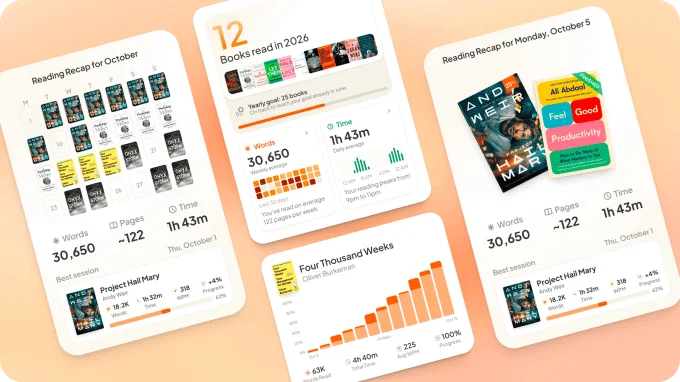
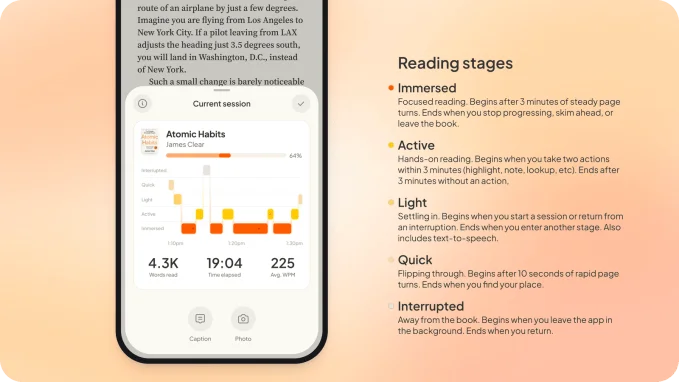
Readwise describes the app as “a cross between Kindle and the Goodreads apps.” It combines buying and reading books with a catalog of reading activity that goes beyond start and finish dates. Readers can examine words read, pace, depth, immersion and individual sessions. Those measures could give a reader a clearer picture of how a book fits into daily routines, though the numbers can describe behavior without explaining why a particular book held someone’s attention.
The store launches in the U.S. with “millions” of e-books from the five largest publishers and other suppliers. It also offers print books, fulfilled through Bookshop.org’s distributor, plus some audiobooks. Readwise says more countries are planned. That mix gives the app a broader retail role than a tracker that only records books acquired elsewhere, but the launch still depends on which formats and titles are available to each reader.
The timing puts the app among a growing group of services looking for new ways to help people discover books and keep track of their reading. But most challengers have focused on clubs, lists, goals and social features. Selling e-books puts Readwise closer to Kindle, which remains the dominant store: Kindle and Kindle+ (formerly Kindle Unlimited) together account for 83% of the market, according to the cited figures. That’s a formidable incumbent position, and Readwise’s distinction will have to come from the reading layer around the purchase, not the mere presence of a catalog.
Tracking beyond Readwise Books
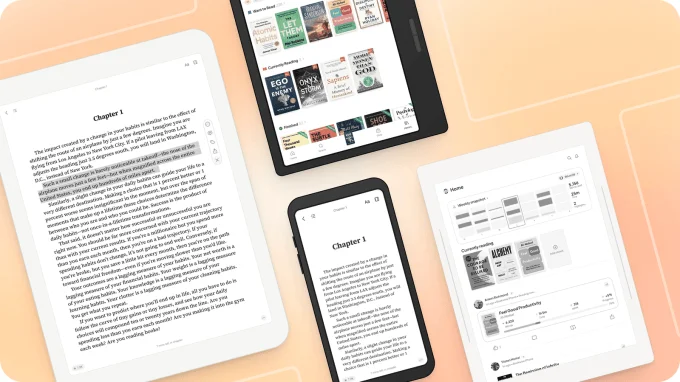
Readwise doesn’t make an e-reader, so it can’t match Kindle’s hardware-to-store setup. Instead, it’s building a reading hub that spans books people buy through the app, files they upload and activity recorded elsewhere. Readers can log sessions through Kindle’s browser-based Cloud Reader, or photograph a physical book to record progress. This approach makes the app less dependent on one device, but it also asks readers to bring activity together across different formats and habits.
The app also accepts DRM-free EPUB files and can read them aloud using text-to-speech. Readwise sees detailed session data as a way to make reading habits visible, drawing a comparison to Strava’s exercise metrics. The analogy helps explain the product: a session becomes something a reader can review, rather than an invisible stretch of time. And yet, reading doesn’t always benefit from being measured. A chart can show a change in pace; it can’t tell you whether you enjoyed the chapter.
Co-founders Daniel Doyon and Tristan Homsi wrote that reading, like exercise and healthy eating, can come with guilt. In their blog post, they argue that tracking sessions can make reading progress tangible, helping people improve without relying on goals, streaks or scheduled reading. Readwise says users most often report that the app has helped them read more without those prompts. That’s a notable claim because it suggests the company sees measurement as encouragement, not competition. The test is whether readers find the records useful over time, after the novelty of seeing new metrics wears off.
AI features and an open data model
With publisher approval, Readwise plans to add AI features such as session recaps, definitions, translations and questions tied to the passage a reader is currently viewing. For now, HarperCollins is the only publisher that has opted in. That limit matters: the usefulness of passage-level tools will depend on which books support them, and a feature available for only part of a reader’s library may be hard to make part of a routine. The promise is context. The practical question is coverage.
The app also exposes a public API and an MCP server, giving developers ways to work with reading data. AI agents could use that access to research recommendations, publish a reading page on a personal site or automatically log sessions from a customizable e-reader. That openness gives Readwise a different route to community and discovery than a closed book-tracking service. (And this is the part most people overlook.) The API could matter as much as the store if it lets readers carry their records into tools they already use. If you’re working in this space, the larger signal is that book data may become useful beyond the app where it was collected.
What the model has to prove
Readwise Books is free while in beta and currently requires an invite, unless the reader already subscribes to Readwise. Some AI features may later require payment. Readwise’s existing apps for reading and tracking highlights cost $7.99 per month each, or $9.99 per month together. Those prices provide context for the company’s subscription business, but the article doesn’t establish what Books will cost after beta or which features might sit behind a paid tier.
The app’s clearest test will be whether detailed tracking and open integrations can make it useful across a reader’s library, even without Readwise-owned hardware. A store can bring books in; it can’t, by itself, make readers return to a tracking tool. This is more significant than it looks: Readwise is treating reading history as portable personal data, while also trying to sell the books that generate it. For readers, the appeal will hinge on whether that combination feels helpful rather than like another task to maintain. For the company, the hard part is turning an interesting record into a habit. The distinction between the two is the whole bet.