Coros Pace 4 vs. Amazfit Cheetah 2 Ultra: What a Spartan Race Reveals
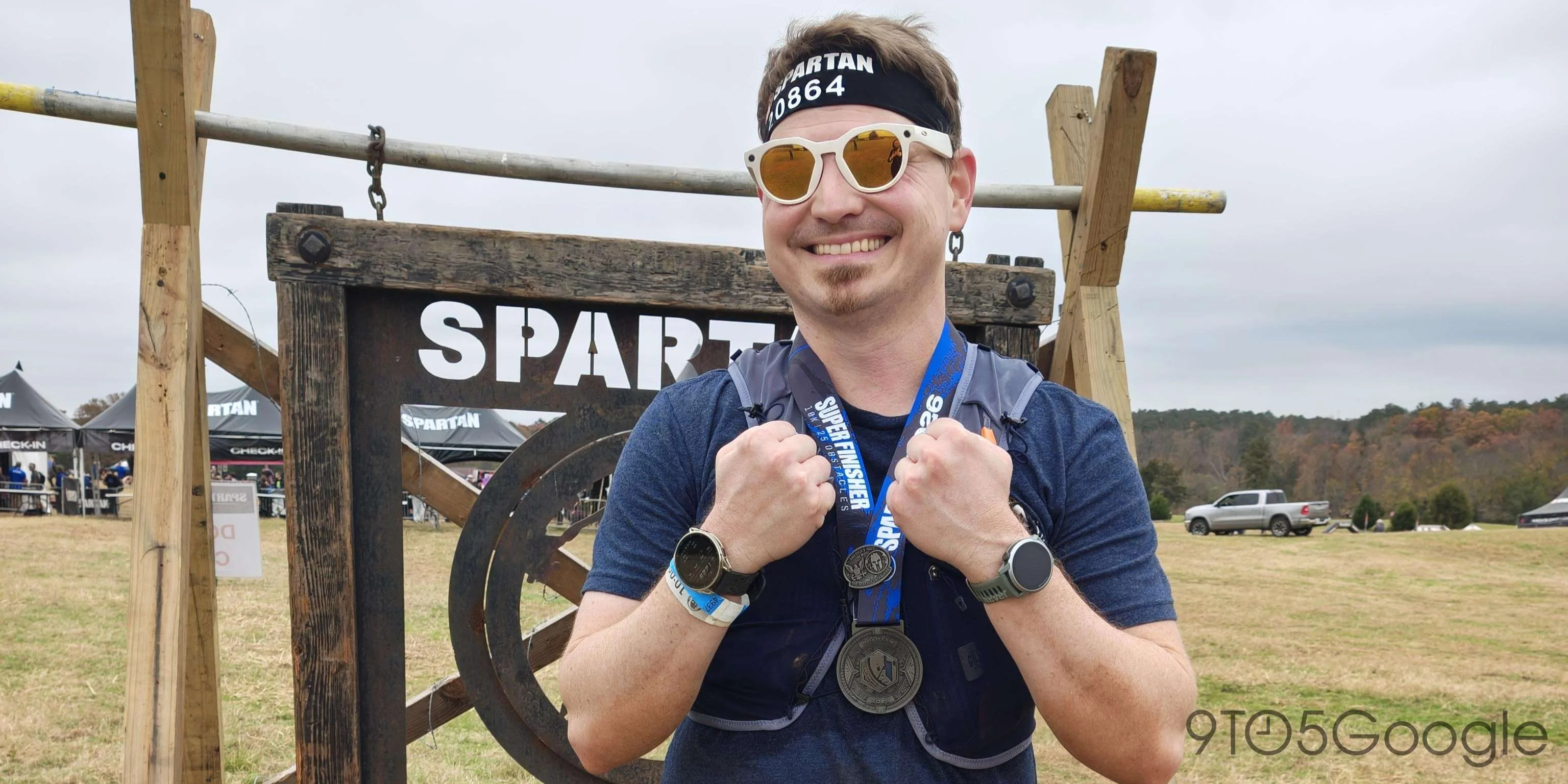
The Coros Pace 4 and Amazfit Cheetah 2 Ultra came through a 6.8-mile Spartan Super with broadly similar GPS tracks. Their sharper divide showed up in the data they recorded along the way: Coros is tuned for running, while Amazfit handled the stop-start demands of an obstacle course with more detail. That makes the choice less about which watch has the longer feature list and more about what kind of training you need it to interpret.
One course, two different workouts
The Spartan Super included 25 obstacles, from stretches of running to tasks that forced a sudden change of pace. A barbed-wire crawl, for example, can turn a run into a slow crawl in seconds. That’s a very different pattern from a road race, where speed tends to vary more gradually.
This was my first Spartan Super after eight shorter Spartan races, all in the 5K format. I’ve never thought of myself as a runner, but I set a goal this year to change that. Training plans on fitness watches helped make running a regular part of my routine, and the Pace 4 became a fixture in the month before the race.
I wore the Amazfit Cheetah 2 Ultra, priced at $599, on one wrist and the Coros Pace 4 Suguru Osako edition, listed at $289, on the other. Both target people who train hard and promise long battery life. I also captured 40 video clips with Oakley Meta HSTN smart glasses, though those recordings aren’t the focus here.
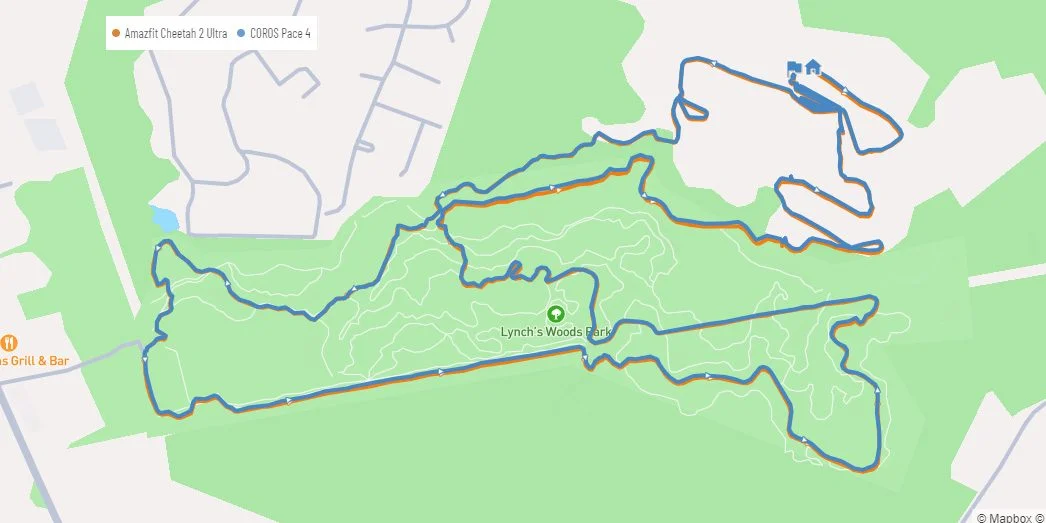
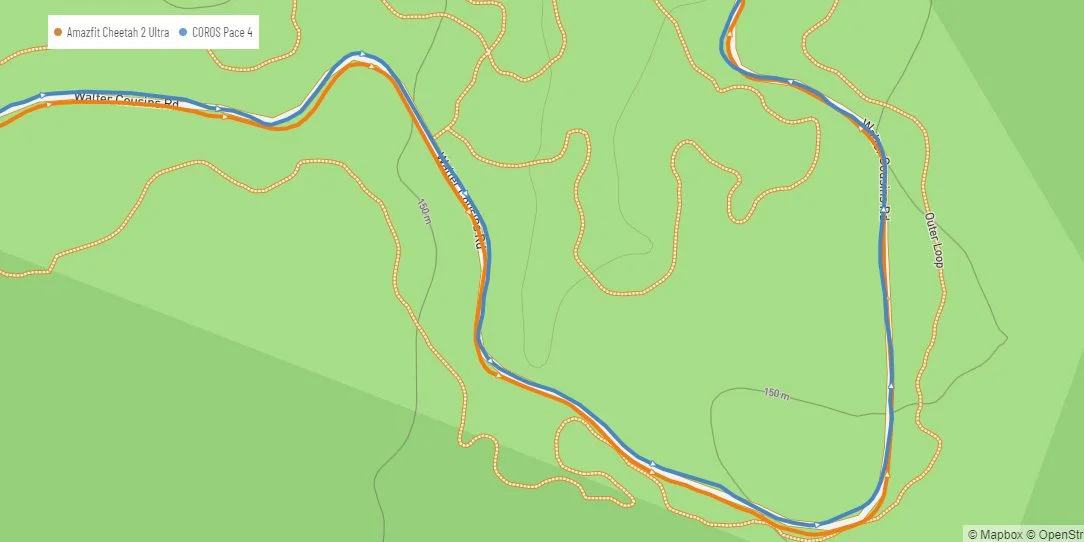
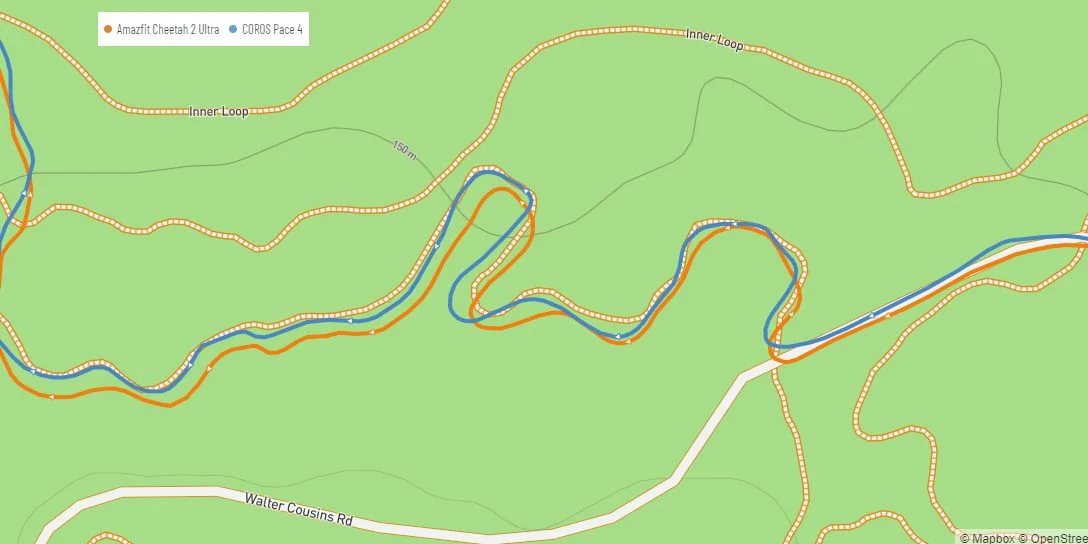
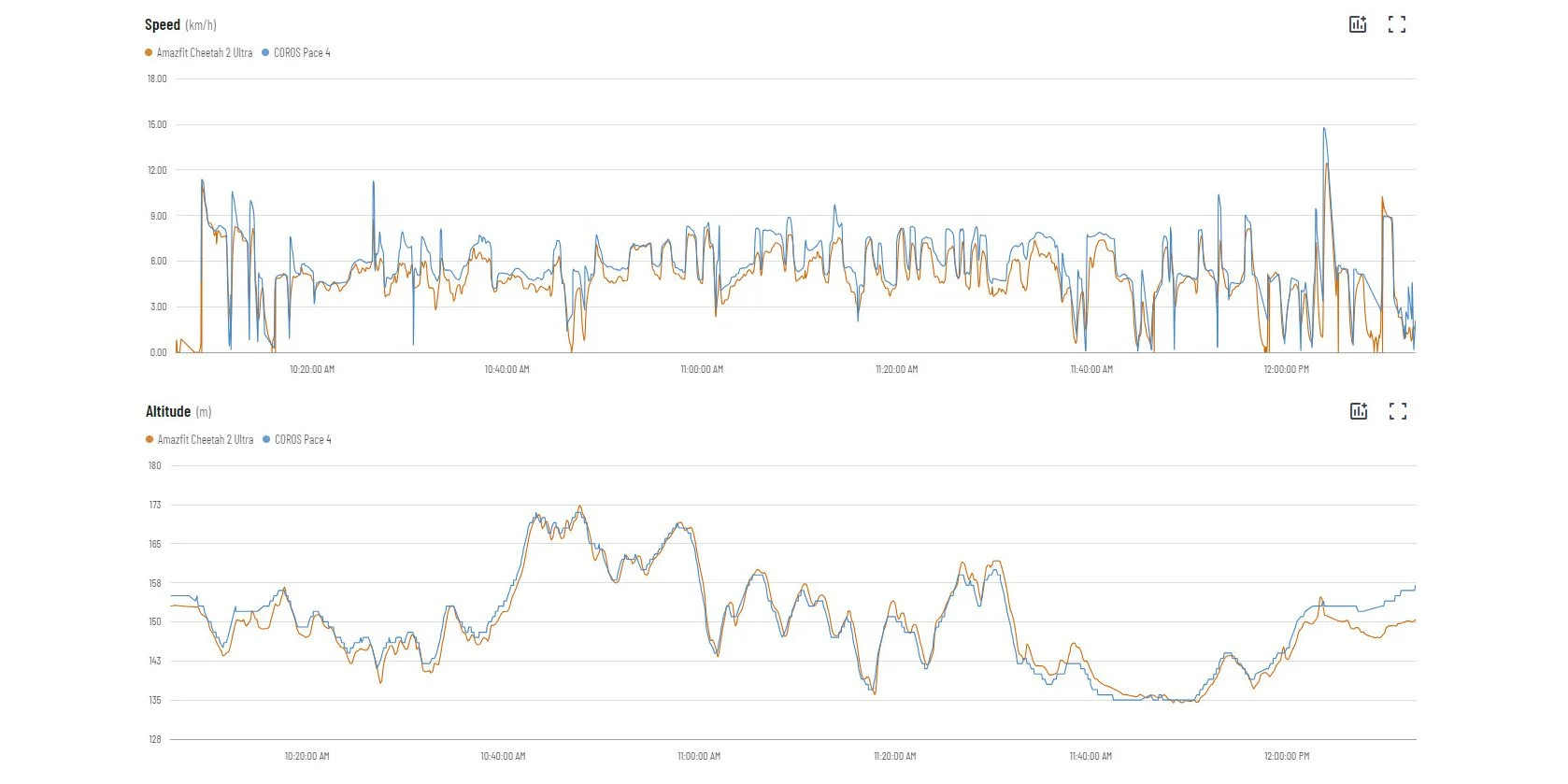
The run itself offered a useful comparison because both watches were exposed to the same route and the same changes in effort. Looking at their GPS traces alongside the trail’s pre-marked paths, I found the watches generally stayed on course. They differed in small position details, but neither produced a meaningful divergence in the route recorded.
Coros feels built for the run
At 32 grams with its nylon band, the Pace 4 is strikingly light. Many full-featured watches, including the Amazfit Cheetah 2 Ultra and the Apple Watch Ultra 4 and Samsung Galaxy Watch Ultra 2 cited in this comparison, fall in the 60-to-70-gram range. The Pace 4’s lower weight is the sort of difference you notice over a long session: it sits lightly on the wrist without feeling flimsy.
That physical design fits the watch’s focus. I’d been using the Pace 4 for about a month and liked its interface, haptic feedback and battery life. Coros clearly prioritizes running, and the brand’s popularity at my weekly run club suggests that focus resonates with other runners, too.
The watch’s handling of the race data reinforced that impression. When I slowed or stopped at obstacles, the Pace 4 sometimes paused its recording. The Cheetah 2 Ultra, by contrast, recorded the full activity without intentional gaps. On a conventional run, Coros’s choices can make the resulting record easier to interpret. In an obstacle race, where movement repeatedly shifts between running, climbing and crawling, those pauses can leave out context.
Even so, the Coros data was more convincing on running cadence. Its average cadence appeared to reflect the actual running portions better than Amazfit’s figure. That’s a useful distinction: a watch can capture more of an activity without every resulting metric being more representative of a specific part of it.
More detail from Amazfit, especially off the road
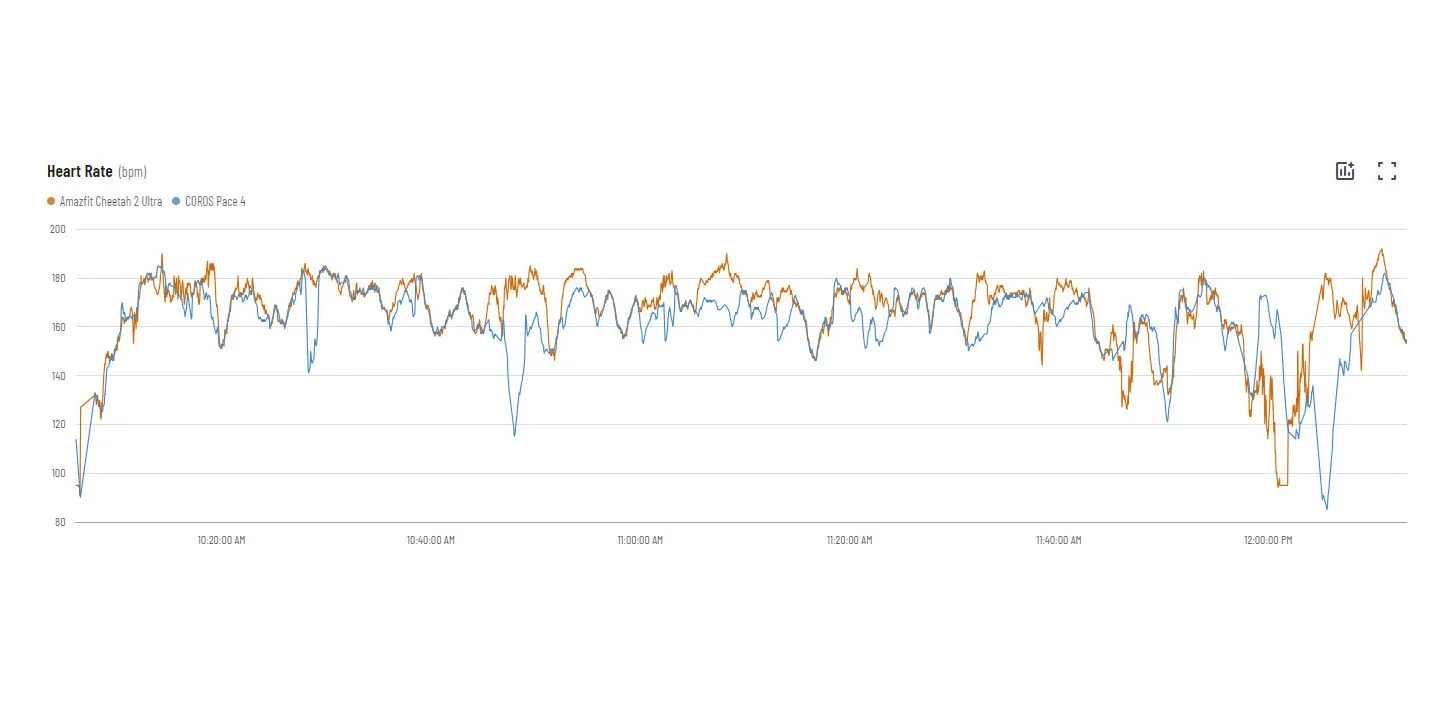
Heart rate and speed showed the clearest differences between the two recordings. During the race, heart rate could shift sharply as effort changed from running to an obstacle and back again. The Cheetah 2 Ultra’s record included more individual data points, making those changes easier to see. The Pace 4’s trace looked smoother, with some larger swings less visible.
For a workout with frequent changes in intensity, that extra granularity gives Amazfit an edge in showing what happened moment by moment. It’s why I tend to trust its heart-rate output more for mixed training. Coros’s smoother presentation makes more sense when the goal is to track a steady run, where readings may average out more naturally over time.
Coros recommends pairing its watches with a heart-rate monitor. That can supply additional readings, a relevant option for runners who want more detail than the watch’s optical sensor provides. The race also suggests that sensor data and the way a watch processes it both matter: more points can show rapid changes, while smoothing can make a running session easier to read.
Elevation offered another example of different data choices. Amazfit reported altitude to hundredths of a meter; Coros rounded to whole meters. During one descent, the Cheetah 2 Ultra showed a change from 152.15 meters to 143.17 meters. Coros registered 153 meters at the top, then a drop to 145 meters at the bottom. The result was a stair-stepped trace, rather than the finer-grained descent in Amazfit’s record.
Choose for the training you actually do
The experience left me with a clearer sense of why an ultralight running watch has appeal. At 32 grams, the Pace 4 makes a long run easier to forget about, and its cadence readings matched the running sections of this race well. For someone whose training mostly means logging miles, that focus feels like a strength.
Amazfit’s Cheetah 2 Ultra made a stronger case when the session mixed different kinds of effort. It kept recording through the obstacles and offered a more detailed heart-rate trace, giving a fuller picture of a race that didn’t behave like a continuous run. Its broader fitness orientation is a practical fit for workouts that move between activities or intensity levels.
I started using Amazfit’s Zepp app and run-coaching feature earlier in the year, first with the T-Rex 3 Pro. I appreciate that the app includes a wide range of features without requiring a subscription for most of its core tools, including an AI run coach and food logging. That helped me build a running habit, though the race comparison itself came down to the watches’ weight and interpretation of activity data.
GPS was close enough that it didn’t decide the comparison. The more useful question is whether a watch should prioritize a light feel and running-specific metrics or capture more variation across a complicated workout. For regular runners, the Pace 4’s low weight is a persuasive everyday advantage. For obstacle races and varied training, the Cheetah 2 Ultra’s fuller recording looks better suited to what actually happens on the course.