Best Early Black Friday Espresso Machine Deals: Breville Barista Express for $500
Early Black Friday Espresso Machine Deals Worth a Look
By Kat Merck · Gear · Nov. 2, 2026, 2:38 p.m.
Thanksgiving coffee service can turn into a public performance. If you’re hoping to serve your in-laws espresso or cappuccinos, a new machine gives you time to learn its quirks before Uncle Bob starts coaching from the kitchen doorway. The early Black Friday discounts make that practice run less expensive, too. But a lower price won’t remove the learning curve: espresso asks you to pay attention to preparation, timing, and the machine’s controls. A few low pressure mornings before guests arrive can be more useful than trying to master everything during the holiday rush.
This is more significant than it looks: espresso machines reward familiarity, and a few weeks of practice can matter more than buying the fanciest model. Every machine featured here has been tested and recommended by a WIRED reviewer. One colleague, for instance, has used the Breville Barista Express happily for seven years. That kind of experience offers a useful signal about staying power, though it doesn’t tell you whether a machine suits your counter, budget, or preferred routine. You can read WIRED’s espresso machine reviews and browse all of WIRED’s deals coverage.
Featured machine
The OG: Breville Barista Express — Amazon lists it for $500, down from $700, a 29 percent discount. Best Buy and Seattle Coffee Gear also list the machine at $700. The price difference is straightforward, but the advertised cut matters only if the machine’s all in one format fits your needs. The Barista Express includes a grinder, which keeps the setup contained, while the grinder’s performance is one of its known compromises.
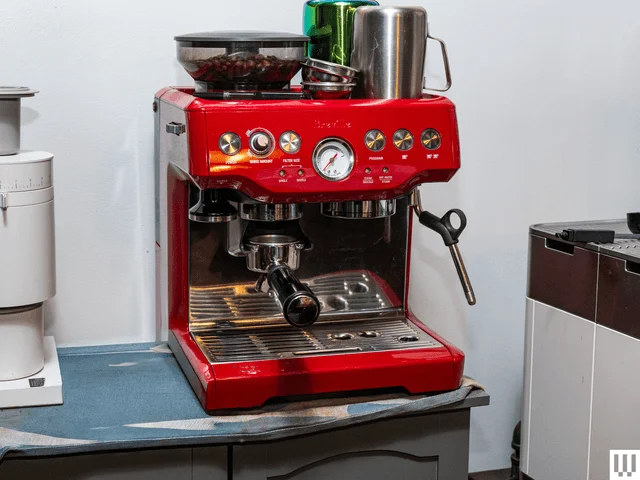
Lead image courtesy of Amazon.
Three machines, three very different budgets
The Meraki Tech Espresso Machine makes a style-first pitch, but its $1,999 list price is hard to ignore. Shop has it for $1,799, a 10 percent discount; Amazon lists it at full price. That’s still a costly choice, and the available details here don’t explain what the Meraki offers to justify the premium. A discount can soften an asking price without making the underlying value clear. If you’re comparing it with less expensive machines, the case for spending more needs to rest on features or performance you actually want, and those details aren’t provided here.
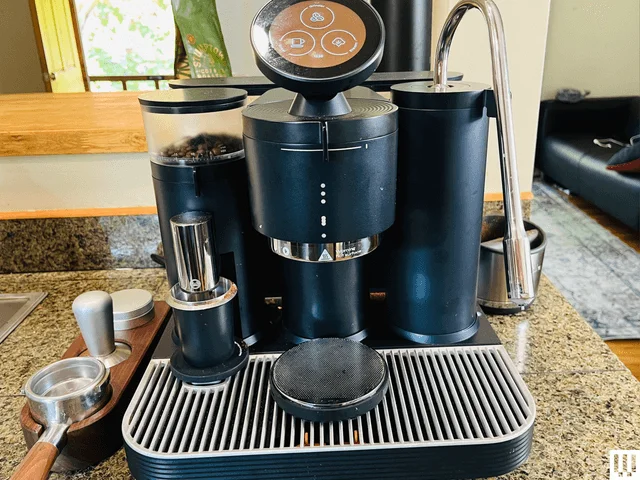
A traditional pick at a lower price
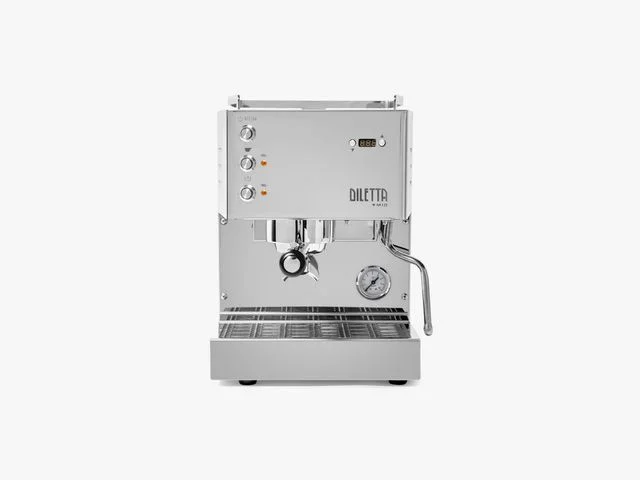
The Diletta Mio is framed as the traditional option, and the current price makes that positioning more persuasive: Amazon lists it for $1,209, down 14 percent from $1,409. Seattle Coffee Gear also lists it at $1,409. If you’re comparing these machines on price alone, that gap is meaningful; the fragment doesn’t provide enough performance detail to say how the Mio compares in the cup. That limit matters, since a lower price is only one part of choosing an espresso machine. Buyers still need to weigh workflow, consistency, and the effort they’re willing to put into each drink, none of which can be resolved from the listing details here.
The value case: Casabrews 5700 PRO
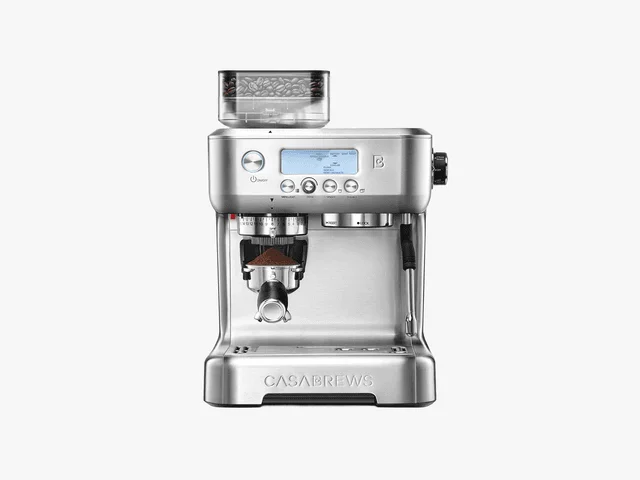
At $400 on Amazon, the Casabrews 5700 PRO is the clear budget outlier: it’s 11 percent off its $450 list price, while Bering’s lists it at $490. The lower cost changes the question from “Which premium machine?” to “What are you giving up to spend less?” The supplied details identify it as a semiautomatic machine, but don’t settle that tradeoff. Semiautomatic machines generally ask the user to take an active role in preparation, so the price comparison alone won’t tell you how much attention it requires or whether that routine suits your kitchen.
Here’s the thing: the lowest price is a useful starting point, not a verdict. If you’re working in this space, you’ll know that a machine’s day to day fit can matter as much as its headline discount. The available information doesn’t establish how the Casabrews performs against the pricier options, so the savings come with an unanswered question about the experience.
The Breville Barista Express Is $200 Off
Breville Barista Express: a worthwhile $500 deal
The Barista Express’s strongest case is that it puts a grinder and espresso machine in one package without making the setup hard to use. WIRED also praises its sturdy build and dependable performance over years of testing, along with strong pressure and temperature control. The trade-off is the grinder: it works, but an upgrade would make this package more appealing. That means the convenience of one machine and one purchase has to be balanced against a component the reviewer sees room to improve. A practical compromise.
At Amazon, it’s listed for $500, down from $700—a 29 percent discount. Best Buy and Seattle Coffee Gear list it at the regular $700 price. That makes Amazon the clear deal in this group. If you’re considering an all-in-one machine, the cut is substantial; just keep the grinder limitation in mind. The product photo is credited to Julian Chokkattu. The discount gives a familiar, tested machine a stronger case, especially for someone who values a single compact setup, but it doesn’t erase the product’s trade-offs.
What the discounts tell you
These offers span a wide range, from a $400 semiautomatic option to a $1,799 style-led machine, but the article’s details are uneven. The Breville has the clearest performance context, including reviewer assessments and a colleague’s long use. The other listings chiefly establish prices and broad positioning. And yet, that’s enough to identify where the deal is strongest: the Barista Express has a concrete discount and a known set of strengths and weaknesses.
For shoppers, the useful next step is to match the machine to the kind of coffee routine you’ll actually keep. A built in grinder may simplify setup, while a semiautomatic machine can demand more hands on work; the source doesn’t provide enough detail to rank these models on taste or ease. Compare the current asking price with the listed regular price, then look closely at the product’s workflow and review record before treating a markdown as proof of value. The savings are real on paper. Whether they make a machine right for your home depends on what you expect it to do.