2026 iPad Mini Review: OLED Display, Lighter Design, and Waterproofing
Review: iPad Mini (2026)
By Luke Larsen · Gear · Nov 3, 2026, 9:00 AM
The 2026 iPad Mini earns a 7/10. Apple has made its smallest tablet better in ways you’ll notice every day: the OLED screen is sharp, the design is lighter, and the device is finally waterproof. But the higher price puts pressure on the very thing that made the Mini appealing: its small size.
Apple’s eighth-generation Mini gets an OLED display, a faster chip, more memory, a thinner body, and a landscape webcam. It’s a substantial refresh, and the tablet still has a clear use case: a device you can hold comfortably in one hand and take on the go. The harder question is whether those upgrades justify the cost when Apple sells other iPads too. (The review’s lead image is courtesy of Amazon.)
WIRED: The OLED display is exceptionally sharp. The tablet has 12 GB of memory, is waterproof, and feels lighter and smaller in hand. The optional nano-texture screen is particularly good outdoors, and the landscape webcam improves video calls.
TIRED: It’s expensive for a small tablet. There’s still no Face ID or 120-Hz ProMotion, and the OLED panel could be brighter.
The Mini seemed easy to dismiss as phones grew larger and Apple’s lineup expanded. That reading misses what this update shows: the tablet still has a distinct job. Larsen used it for a week, including on a short trip, and found it especially handy during airport rides and time spent waiting at the gate. If you want a compact screen for reading and passing the time on the move, that’s a real advantage. Whether it’s worth paying a premium for is less settled.
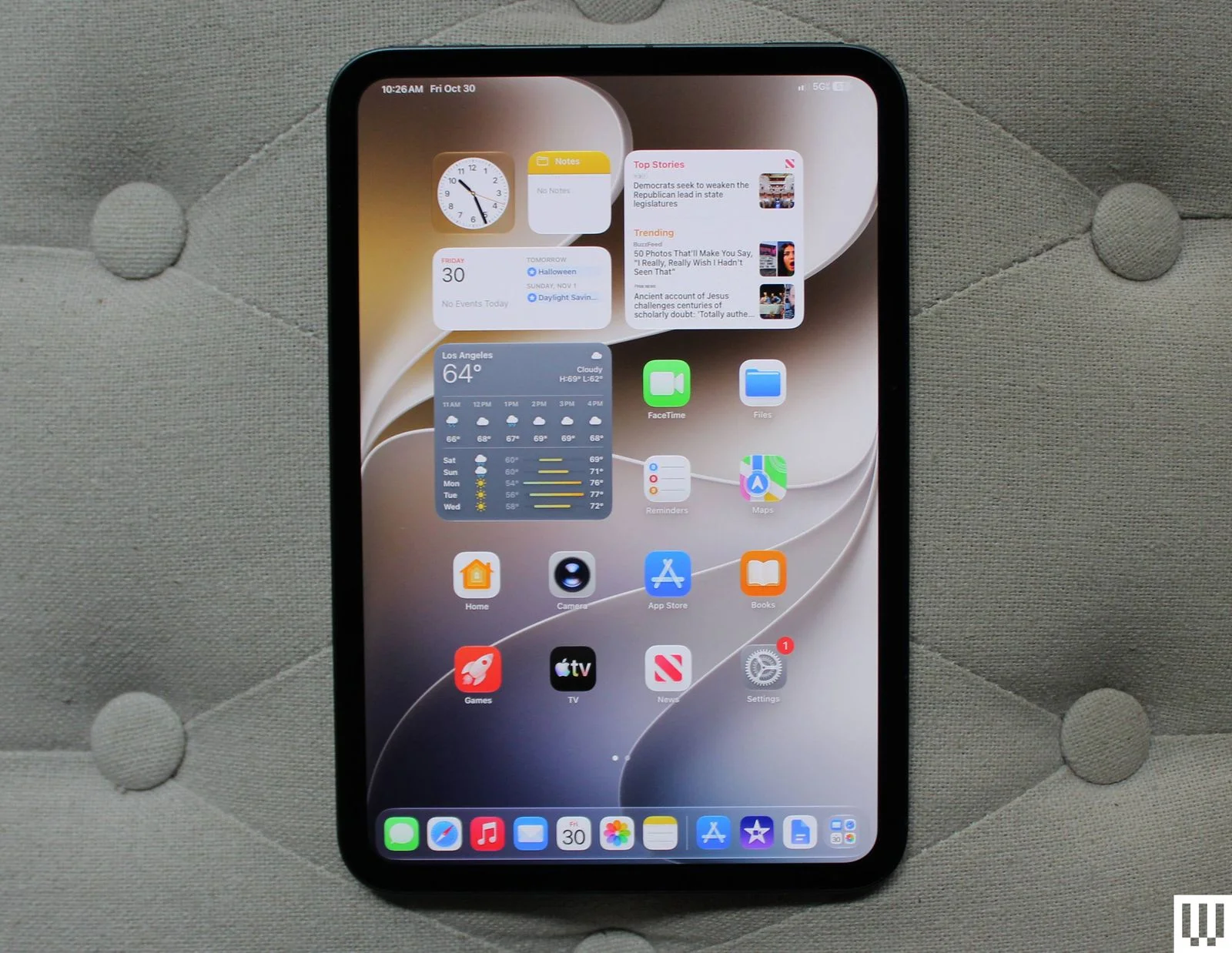
A sharper screen, built for small hands
The new 8.5-inch display is a little larger than before, while the tablet’s overall dimensions have barely changed. The move from IPS to OLED is the bigger story. This is a Super Retina XDR panel, but it isn’t the tandem OLED used in the iPad Pro or OLED MacBook Pro. It also lacks the Pro’s 120-Hz refresh rate and doesn’t get as bright: up to 600 nits in SDR and 1,200 nits in HDR, 400 nits below the iPad Pro. Those figures are still impressive for an OLED tablet, roughly matching the brightness of the Mini-LED M6 MacBook Pro.
For most settings, the screen is bright enough. The optional nano-texture glass, which adds $100, makes outdoor use much more pleasant. Larsen tested that version. Rather than applying a matte layer or coating, Apple etches the glass itself, scattering reflections while preserving the screen’s apparent brightness. The effect makes reading outdoors feel closer to reading on paper. Apple offers the same option on the MacBook Pro and iPad Pro, and it’s unusually effective here.
The Mini also has the sharpest image among its iPad siblings: its smaller panel gives it 19 percent more pixel density than the other models. You can see the difference. And the display isn’t the only reason this tablet works on the move. At just over half a pound, it feels close to a phone in your hand, and one-handed use comes naturally.
For context on the Mini’s place in Apple’s lineup, see WIRED’s guide to the best iPads. The iPhone Duo comparison also frames the question of whether Apple still needs a small tablet: the iPhone Duo review.
The 2026 iPad Mini makes a stronger case as a small creative and gaming tablet than its size suggests. The catch is that Apple has priced it like a device with a much broader audience. At $699, it’s a tougher recommendation than the previous model was at its original $499.
Small tablet, real trade-offs
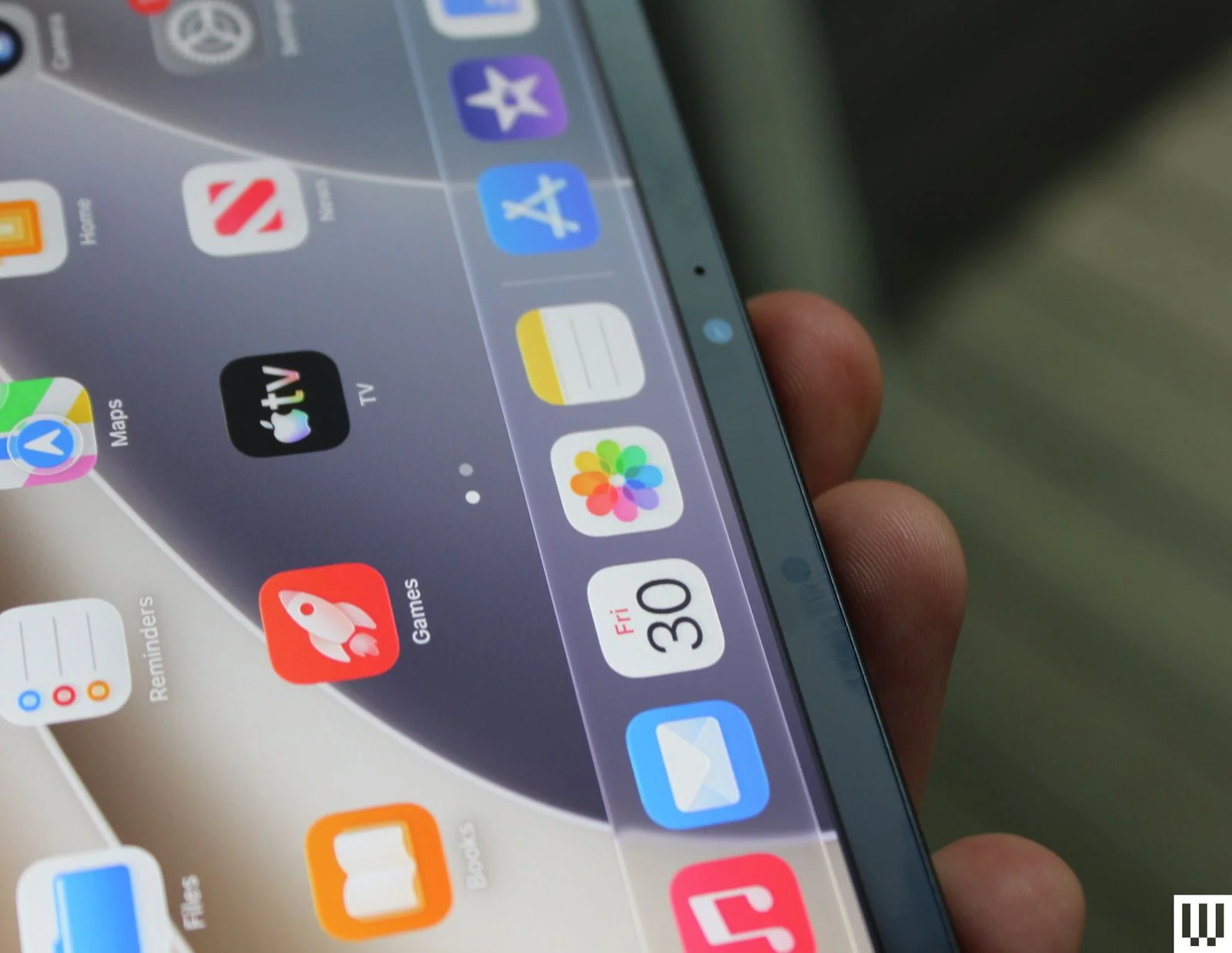
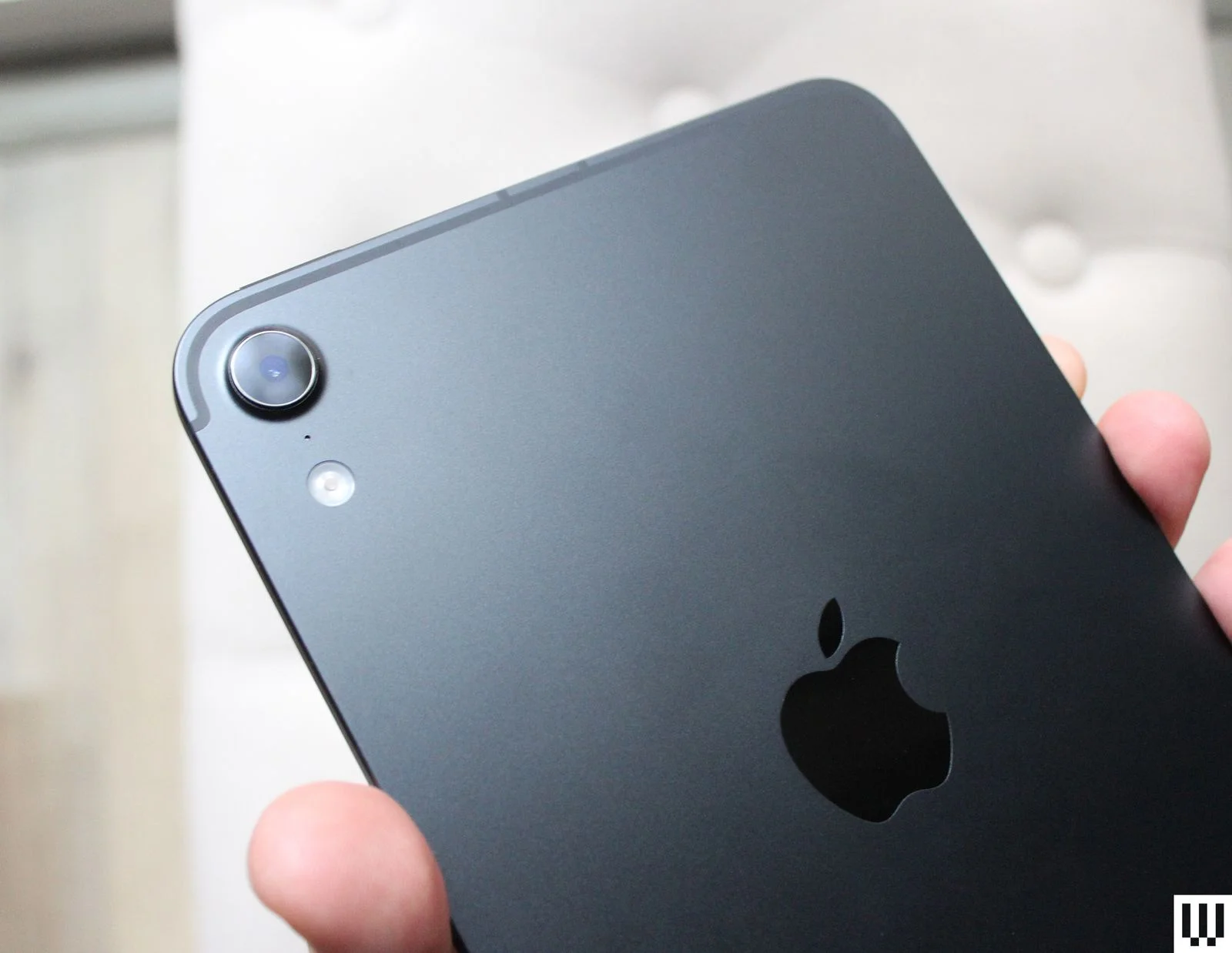
There’s plenty here that works. The 12-megapixel front camera has moved to the side bezel, so video calls feel more natural. The rear 12-megapixel camera is unchanged and best treated as a tool for scanning documents or QR codes. Touch ID lives in the power button; Face ID is still absent.
The Mini can extend its display to an external monitor, and iPadOS now supports windowing and a cursor. Those features make it more capable as a work device, though they’re less compelling without a keyboard. Its compact body has one practical advantage: you can type with your thumbs.
For note-taking, I’d pick the Mini. It works remarkably well with the Apple Pencil Pro and USB-C Apple Pencil, though illustrators will likely want a larger canvas. The Mini supports USB-C Apple Pencil as well as the Apple Pencil Pro. For workplace point-of-sale setups and other specialized jobs, though, the higher price is harder to defend.
That price buys meaningful upgrades: an OLED display, water resistance, and 12 GB of unified memory. Apple has given the Mini an IP67 rating, a first for an iPad. It can withstand submersion for up to 30 minutes in roughly three feet of water. iPhones have carried IP68 ratings for eight years, allowing twice that depth for the same duration, so the Mini still trails Apple’s phones on protection.
Apple’s demos suggest it sees the Mini as more than an e-reader or game machine: they emphasized creative apps and on-device AI. Every storage tier—128 GB, 256 GB, or 512 GB—includes 12 GB of memory, four more than the previous Mini and the same amount as the current iPad Air. Apple doesn’t list that memory in its own specs, but it helps explain the tablet’s multitasking and local AI ambitions. It’s an odd contrast with the MacBook Neo, which has just 8 GB.
The A20 Pro chip outpaces the MacBook Neo and is also used in the iPhone Duo and the iPhone 18 Pro and iPhone 18 Pro Max. But the storage tier now affects the chip configuration. Only the 512-GB version has a six-core CPU and two 16-core Neural Engines. I tested that model; the other versions lose a CPU efficiency core and one Neural Engine.
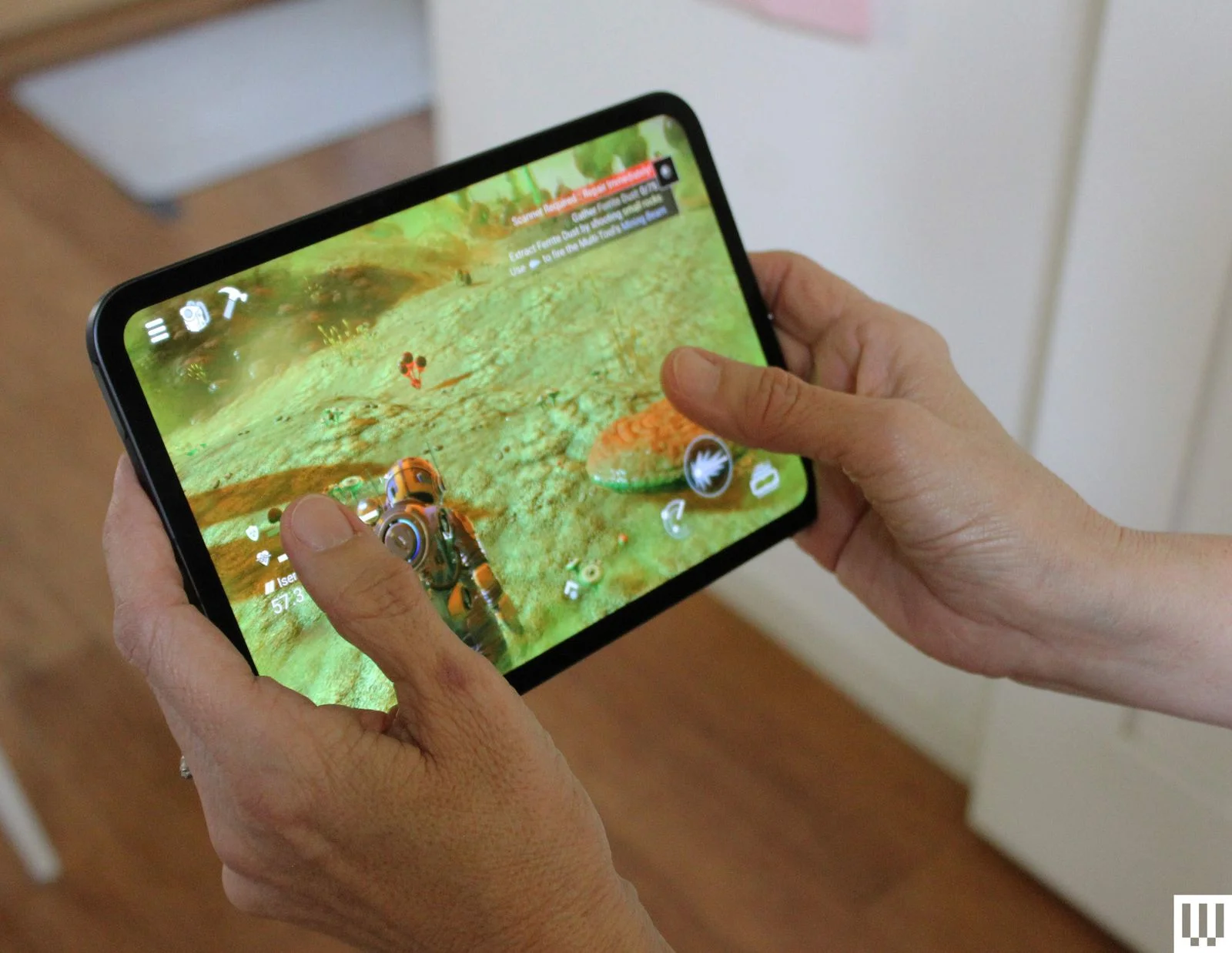
Gaming performance is convincing for a tablet this small. Oceanhorn 3, Fortnite, No Man’s Sky, and Assassin’s Creed Mirage all ran smoothly at 60 frames per second, though their textures and effects were dialed back. No Man’s Sky, which arrived on iOS and iPadOS the previous week, was the most striking. The M5 iPad Pro is a much stronger gaming machine, but pair the Mini with a mobile controller—the Backbone One is a good choice—and it’s an enjoyable way to play.
Local AI has tighter limits. LM Studio recommended Qwen 3.5 with 4 billion parameters, a modest model that can handle simple tasks while keeping text processing on the device. That workload depends on the GPU, so the second Neural Engine in the 512-GB model shouldn’t change its speed. The Mini also supports Siri AI, including expressive voices and live dictation.
The price narrows the audience
The Mini has always been a premium niche tablet for reading, films, and games. At $499 when the previous generation launched, that niche was easier to accept. Now it starts at $699. If you want the top configuration for professional work, the bill reaches $999—or $1,099 with the nano-texture display, roughly the price of a MacBook Air. The Mini is a different kind of device, but it’s fair to ask whether professionals would rather have a larger screen and better keyboard support.
There’s a real case for the Mini as a note-taking tool, and its gaming performance makes good use of the compact form. Yet a larger display will likely suit illustrators better, and specialized workplace uses don’t automatically justify the new cost. The price hike may reflect Apple’s higher memory costs, but that’s speculation. The OLED screen, water resistance, and added memory do bring everyday benefits; the question is whether enough buyers need them in this size.
Apple could have offered an 8-GB model at a lower price. That might have kept the tablet closer to its original audience, though it would sit awkwardly beside Apple’s emphasis on Siri AI, which requires at least 12 GB. It would also create more distance from the iPad Air: the Mini costs $150 less, has OLED, and fits in one hand, while the Air gives you an 11-inch screen and support for the Magic Keyboard. Choosing between them means deciding which trade-offs matter more.
The iPhone Duo complicates the Mini’s pitch, too. At $2,000 it costs far more, but it can go in your pocket and is always with you. That convenience addresses the Mini’s most persistent weakness: it’s easy to leave at home. The new Mini is a dream device for casual gaming, reading, and browsing if you value its screen and power enough to carry a separate tablet. For everyone else, $699—and the question of whether 12 GB of RAM and OLED are worth it—may be the deciding point.
The color choices tell a similar story about Apple’s intended buyer. Starlight remains, joined by Midnight, a dark navy finish borrowed from the MacBook Air. Blue, Purple, and Space Gray are gone. A narrower palette may suit a $700 product aimed at work, though fewer choices don’t make the tablet more versatile.
Meant for the road
Apple rebuilt the four-speaker system to seal the Mini’s enclosure for IP67 water resistance. The side grilles are gone: tweeters sit behind two narrow openings along the display glass, while bass drivers are built into the display itself, a setup Apple calls Acoustic Display.
The stereo sound comes across best in portrait orientation, provided your fingers stay clear of the display. Speaker vibration is barely noticeable unless you turn the volume all the way up. For a tablet this size, the audio is respectable, but it can’t match an iPad Air or MacBook Air. Videos and the occasional movie are well within its range.
The previous iPad Mini cost $499 at launch, before later price increases. The new model starts at $699, and the 256-GB configuration is listed at $799.