Inclusive Safety Design: A Practical Process for Building Safer Technology
Kim Crayton’s warning that “intention without strategy is chaos” gets to the hard part of safer technology: good intentions don’t tell a team what to build, what to test, or whose risks to consider. A safety strategy does. And it has to be built into product work, because a feature designed without attention to abuse can hand someone a new way to harm another person.
This chapter sets out a practical process for doing that: bring safety into design, make the case for it to stakeholders, and respond to the argument that more diversity is the answer. More diversity matters, but it can’t by itself prevent unsafe products. Teams also need methods that help them find risks and act on them.
A flexible process for inclusive safety
The aim is threefold: identify how a product could enable abuse, design ways to block or limit that abuse, and help vulnerable users regain control. The Process for Inclusive Safety is a method I developed in 2018 to support those goals. It can be used for a new product or added to work on an existing feature. Its five areas are research, archetypes, problem brainstorming, solution design, and safety testing.
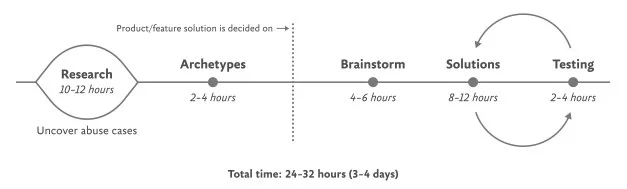
Treat the process as a set of tools, not a rigid sequence. Some steps won’t fit every project; use the ones that match the product and its context, and fold them into the design practice you already have. The method is meant to evolve, too. If you try it, feedback about what worked—or how it could improve—is useful.
There’s one important boundary. These guidelines address safety in general products with broad user bases, which will include people at risk of harm. Products made specifically for vulnerable people or trauma survivors, such as domestic violence, sexual assault, or addiction services, call for a different approach. Chapter 7 covers that work directly.
Step 1: Research how harm happens
Start by examining how the product could be used for interpersonal abuse, then look at the particular experiences of people affected by that abuse. Research should also cover other risks relevant to the product, including data security, racist algorithms, and harassment. The point is to understand the terrain of possible harm before proposing safeguards.
Begin broadly
Review existing products and documented safety failures. A team developing a smart home device should study how similar devices have been used to enable abuse. A team building an AI product should examine reported cases of racism and other harms in AI. Harm has been documented across many kinds of technology; Google Scholar can help locate academic research.
Learn from survivors and advocates
When it’s appropriate, speak directly with people who understand the harm you’ve identified. Start with advocates where possible: they can help the team understand the subject and reduce the chance of retraumatizing survivors. For a project involving domestic violence, relevant experts could include survivors, hotline and shelter workers, staff at related nonprofits, and lawyers.
Pay people for their expertise and lived experience. Asking survivors to recount trauma without compensation is exploitative. Some may decline payment, but make the offer from the outset; donating to an organization working against the relevant form of violence is another option. Chapter 6 discusses interviewing survivors in more detail.
Research abuser tactics without making recruitment a goal
Teams designing for safety are unlikely to be able to interview people who identify as abusers or have committed crimes such as hacking. Don’t make that a research requirement. Instead, use broader research to understand how bad actors turn technology against others, hide what they’ve done, and justify their behavior.
Step 2: Build archetypes around goals
Turn the research into archetypes for people who might cause harm and people who might experience it. These aren’t personas based on interview participants. They’re broader, research-informed representations of likely safety needs—much as accessibility work can account for blind and low-vision users even when they weren’t part of a particular interview pool. Personas often contain detailed information about real users; archetypes can stay general and focus on the goals at stake.
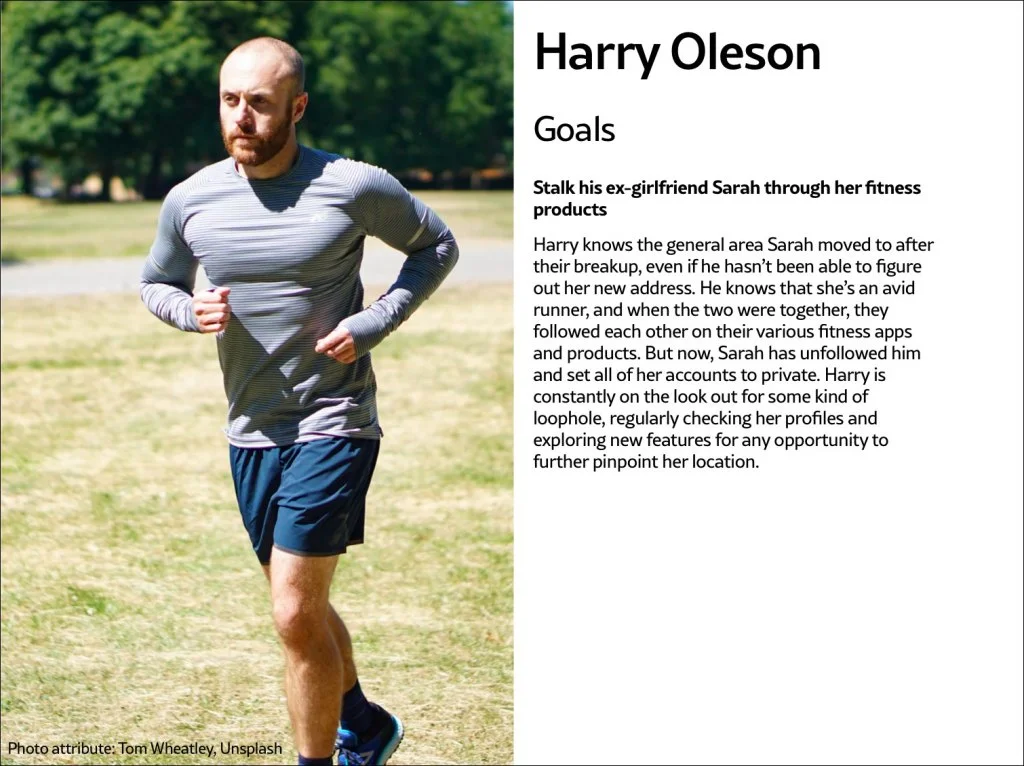
An abuser archetype represents someone treating the product as a tool for harm. That could mean surveillance or anonymous harassment of a stranger, or control and torment directed at someone they know.
A survivor archetype describes someone being harmed through the product. Their needs depend on what they know: they may suspect abuse and need evidence, or may not realize they’ve been targeted and need a warning.

One survivor archetype may not cover enough ground. Someone might know they’re being abused but be locked out of the devices involved; another might know a stalker keeps finding their location but have no idea how. Capture the scenarios your research suggests, because those cases will shape the protections you design.
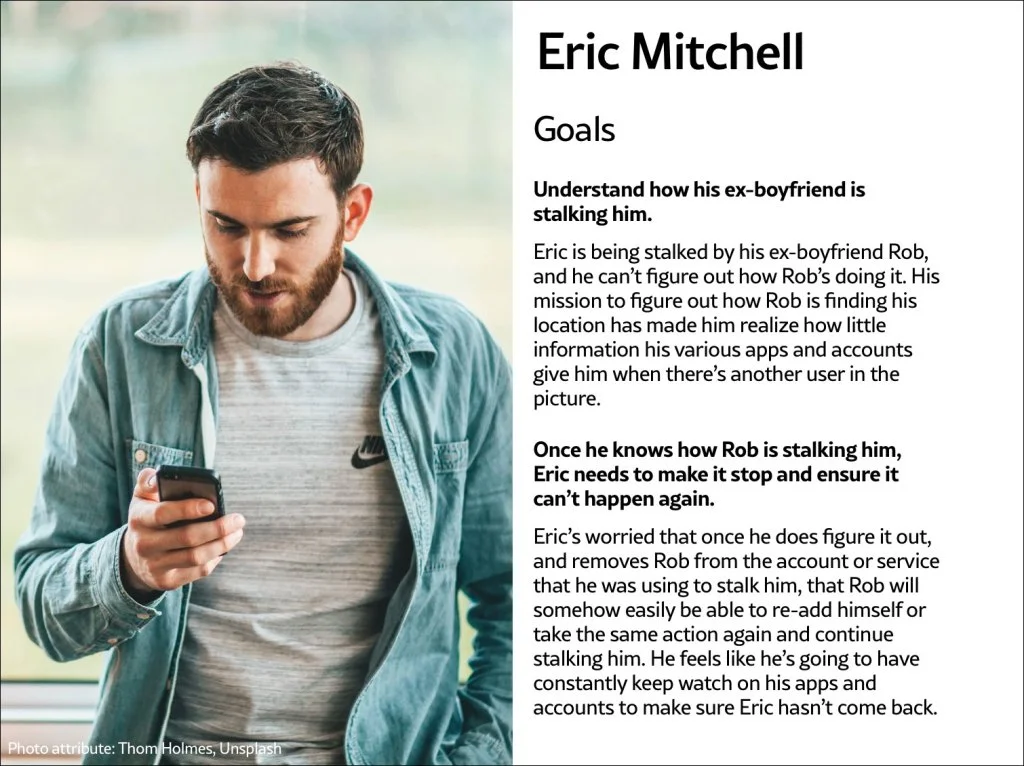
If you create persona-like documents for these archetypes, emphasize goals over demographics. The person causing harm wants to carry out a specific abuse; the person experiencing it may need to recognize the abuse, prevent it, stop it, or regain control of the technology. Those goals give the team something concrete to design against and support.
The abuser-and-survivor framing won’t fit every case. Adapt it. If someone can hack a home camera and speak to children through it, for example, the hacker is the abuser archetype and the children’s parents are the survivor archetype.
Step 3: Brainstorm new ways the product could cause harm
With research and archetypes in hand, look for risks that haven’t already surfaced. The aim is to find harms specific to this product, not to solve them yet. Set aside at least a few hours and ask how the product could enable abuse beyond the cases you already know about.
A “Black Mirror” brainstorm can help the team break out of ordinary assumptions. Inspired by the show’s stories about technology’s darker possibilities, imagine the most extreme ways the product could be used to hurt someone. Give that exercise about 30 minutes, then shift to more plausible scenarios. A little fun in the room is fine; the discipline comes in bringing the ideas back to reality.
You may still worry that the team has missed something. That uncertainty is normal. If you’ve spent at least four hours generating possible harms and have run out of ideas, move on. No exercise can guarantee that you’ve found every risk. Do the best work you can, keep safety on the agenda after launch, and take user reports seriously enough to correct course quickly.
Step 4: Design against abuse and support survivors
Now use the risk list and archetypes to shape solutions. Work this into the parts of your design process where the team already develops responses to research findings. Ask whether the harm can be prevented outright; if not, what barriers could make it harder? Consider how a user might learn that abuse is happening, understand what to do next, and reach support. Look for activity that could signal harm, too.
Some products may be able to offer help when a user reports an incident. A pregnancy app, for instance, could let someone report an assault and offer resources from local or national organizations. That won’t apply everywhere, but even a short discussion can uncover ways the product might help someone safely find support.
Be careful about how that help appears. If an abuser monitors a user’s device, an alert or resource link could increase the danger. Any proactive offer should be voluntary, and the team should consider details such as keeping the user within the app when an abuser may check their search history. The next chapter explores an example.
Step 5: Test from both sides of the harm
Test prototypes—or an already released product—from the viewpoints of the person trying to weaponize the technology and the person trying to regain control. Safety tests can expose gaps, check whether the proposed protections work, and give the team a firmer basis for release. They can run alongside usability testing; in organizations that don’t usually conduct usability studies, a safety session may also reveal confusing interactions.
It’s fine to retrofit a product that wasn’t designed with safety in mind. Test the final prototype or the live product, and include the relevant archetypes. Some projects may need both the abuser and survivor perspectives; if you’ve created several survivor archetypes, test each scenario that matters.
Designers are usually too familiar with their own product to test it well. Bring in someone who doesn’t know the design, set up a realistic task, ask them to think aloud, and observe what they try to do.
Abuser testing
Here, the question is how readily someone could use the product to cause the harm described in the abuser archetype. The goal is to make that task impossible or at least difficult. Use the archetype’s stated goals as the test brief, then see how far the product lets a tester get.