Semantic Content Models Make Omnichannel Publishing Easier
The structure behind a content management system can determine whether information travels cleanly across channels or gets trapped in the layout it was first built for. For a Fortune 500 company pursuing omnichannel publishing, a model shaped like a website’s design system would have made content harder for other platforms to interpret and reuse. The practical lesson: define content by what it means, and keep related information connected.
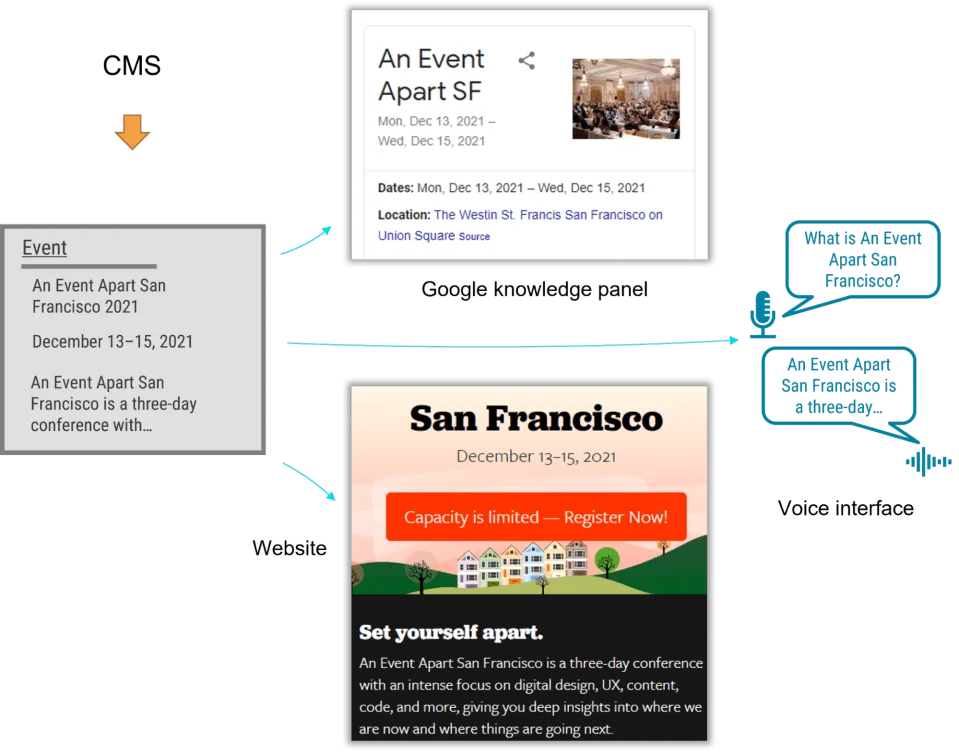
That distinction matters as people encounter information through websites, search snippets, Google knowledge panels, mobile apps, voice interfaces, and bots. An omnichannel strategy depends on content that can move between those destinations. The CMS needs to describe what each piece of information is and how its parts relate, rather than encode how a particular screen arranges them.
Model meaning, not presentation
A content model defines the types of content an organization manages, the attributes each type can contain, and the relationships among those types. A semantic model names types and fields according to their meaning. A model built around presentation instead might define “teasers,” “media blocks,” or “cards.” Those labels can be useful to a web layout, but they don’t tell another system whether a card represents a product, a service, or a customer testimonial.
Types such as product, service, and testimonial give delivery channels a clearer account of the information they’re handling. Each channel can then decide how to present that information. Schema.org is a useful starting point: its community-maintained definitions help platforms such as Google interpret types and properties.
This separation can pay off even when a company has no immediate plans to publish beyond its website. If content is stored independently of its visual treatment, a redesign doesn’t automatically require restructuring the underlying material. Teams can change layouts while retaining the same meaningful content, reducing the pressure to migrate content every time the site’s appearance changes.
Structured data based on Schema.org can also help search engines interpret a site’s information and present it in search results, knowledge panels, or responses to voice queries. That discovery can happen before someone visits the site. For content intended to appear in several channels, semantics are more than a matter of clean architecture: they help each destination understand what it can use.
A set of questions and answers illustrates the point. On a website, it may appear as an FAQ page. A voice interface could use the same material to answer a spoken question, and a bot could draw on it when responding to common queries. Those uses depend on the model identifying the content as questions and answers, not merely as text blocks occupying a particular spot on a page.
Using meaningful types for articles, events, people, and locations can likewise help A List Apart provide structured information to search engines. Readers may encounter that material on the publication’s website or through Google knowledge panels; the same foundation could support voice interfaces in the future.
Keep related information together
Meaningful labels solve only part of the modeling problem. Content that belongs together also needs to stay connected. If a model splits a question from its answer, or separates an article from its headline, channels may have to reconstruct the relationship before they can use the material. That reconstruction adds work and creates room for systems to interpret the pieces incorrectly.
Design-system habits can make this kind of fragmentation seem natural. On a website project, teams often start with visual components and ask how content should fill them. That approach makes a layout tangible, but a layout’s components don’t necessarily match the units that carry meaning. A content model that follows the page’s visual structure may be difficult to manage and even harder for other channels to understand.
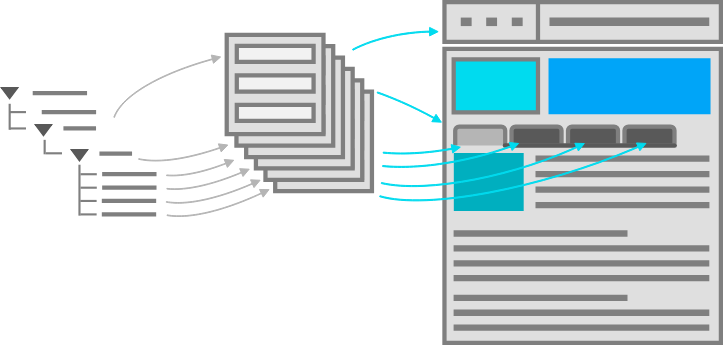
The distinction surfaced in a software product page designed with several tabs. The tabs appeared to call for a reusable “tab section” type, with each section holding whatever content the page needed. One tab might show a product overview or specifications; another might contain resources. That structure would have mirrored the interface, but it wouldn’t have described what the information actually represented.
For a downstream system, “tab section” is an ambiguous label. To determine whether a section contains specifications or resources, the system might have to infer meaning from its position or inspect its contents. Reordering tabs could break that inference. Every channel would need its own logic to decode the same layout conventions, and a future move away from tabs could force a content migration.
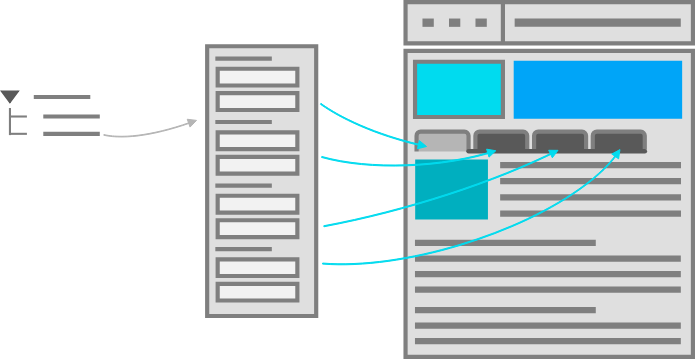
The better model emerged once the team clarified what each tab was meant to communicate: an overview, specifications, related resources, or pricing. Tabs were simply one way to display that information. The model could instead describe the software product with fields such as name, description, screenshots, software requirements, and feature lists.
With those attributes grouped under a meaningful product type, the information stays associated with the product regardless of how a website arranges it. A channel can display the details in tabs, a list, or another interface. A different channel can select the fields it supports without having to decipher which visual component originally contained them.
Make the model useful beyond the first interface
The case for semantic, connected content is strongest when an organization expects its channels to change. A model tied to today’s components can make each new destination depend on the assumptions built into the original website. A model based on meaning gives future interfaces a clearer starting point and lets teams decide how to present information for each audience.
That doesn’t mean the design system has no role. It guides how a particular interface looks and behaves. The content model serves a different job: it describes the information and its relationships. Treating one as a template for the other can produce content structures that work for a single page while making reuse harder everywhere else.
Teams can start with structured data even if a broader omnichannel program isn’t on the roadmap. Schema.org-based markup gives search platforms useful clues about a site’s content. Meanwhile, separating content from presentation gives designers room to revise the experience without making every design change a content migration project.
For the CMS team, the concrete test is whether a type or field explains the content’s meaning without relying on its screen position. If another channel would need to count components, recognize a layout, or guess what a field represents, the model likely reflects the design too closely. Keeping content semantic and preserving the relationships among its parts makes reuse easier to sustain as new destinations emerge.