How Three-Act Storytelling Helps Teams Turn User Research Into Better Product Decisions
Research findings only change a product when people with the power to act understand why they matter. That makes storytelling more than a presentation trick: it gives user research a structure stakeholders can follow, from the problems people face to the decisions that could address them. The comparison to film is useful because it turns a research process into a familiar arc: setup, conflict, resolution.
A three-act structure introduces its characters and their circumstances, raises the pressure, then brings the story to a conclusion. In research, those acts can help teams understand users, test possible responses to their problems, and agree on what to do next. The sequence matters. A team that jumps straight to testing a design may never learn whether it chose the right problem to solve.
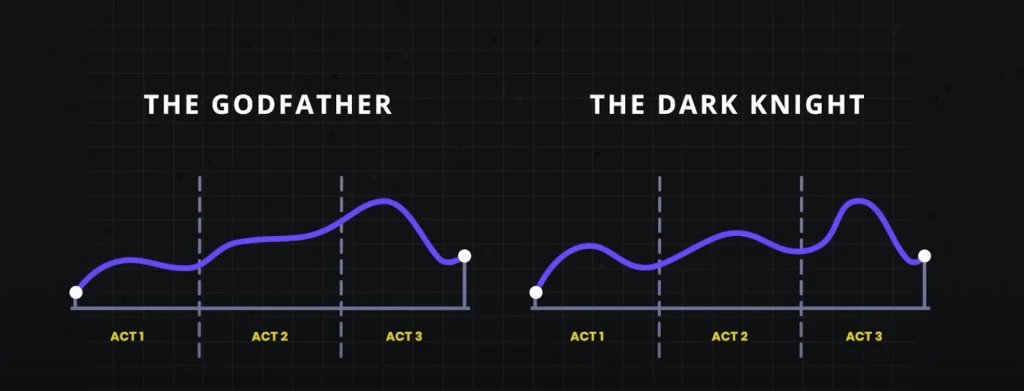
Act one: establish the users’ reality
Research is often treated as optional when budgets or schedules tighten. That’s a costly habit. Product managers may ask designers to rely on experience, or make calls based on their own opinions and familiar best practices. Those shortcuts can help a team make progress, but they can also leave users’ actual problems undiscovered. Research keeps design connected to those problems and can reveal opportunities before competitors do.
The opening act is foundational research: also called generative, discovery, or initial research. Its job is to show what users’ lives look like now, what gets in their way, and how those difficulties affect them. Contextual inquiries and diary studies can uncover both problems and opportunities. This work doesn’t have to be a major project.
Erika Hall’s idea of minimum viable ethnography makes the point neatly. Spend 15 minutes with a user and ask: “‘Walk me through your day yesterday.’ That’s it. Present that one request. Shut up and listen to them for 15 minutes. Do your damndest to keep yourself and your interests out of it. Bam, you’re doing ethnography.” Hall says, “’[This] will probably prove quite illuminating. In the highly unlikely case that you didn’t learn anything new or useful, carry on with enhanced confidence in your direction.”
That’s a low bar to clear, and that’s its strength. You don’t need a stack of research documents to begin; recruit participants, ask, and listen. Even a short conversation can give a team a better sense of users’ circumstances and help people see where their assumptions may be wrong.
Jared Spool argues that foundational research should make up most of a team’s research. Surveys and analytics can add useful evidence: they may support what participants have described or point to questions that need more investigation. Together, these sources help map the current experience and its shortcomings.
That evidence gives the story its human stakes. Users are the protagonists, facing problems they need to overcome. Stakeholders may care because those problems hurt the business—for example, when users can’t complete tasks—or because they empathize with users’ frustration. Either way, a clear account of the problem can give them a reason to pay attention. Once they see the value of involving users in decisions, it may become easier to make that involvement part of other product work, too.
Here’s the thing: foundational research earns its place by showing who the team is designing for and what those people need. That’s the setup for the next act, where a team investigates whether a particular design responds to those needs.
Act two: test the proposed answer
Directional research takes the problems identified in the first act and examines possible solutions. Usability testing is one common method: people try a design or process, and researchers look for unmet needs, confusing flows, and other barriers. As in a film’s middle act, the initial problem may lead to new complications—and to a richer understanding of the people encountering them.
Jakob Nielsen’s guidance is that usability tests typically need about five participants to identify most usability problems. As he puts it: “As you add more and more users, you learn less and less because you will keep seeing the same things again and again… After the fifth user, you are wasting your time by observing the same findings repeatedly but not learning much new.”
A small group can also make findings easier to communicate. When each participant’s experience is distinct, stakeholders may remember the specific difficulties and see why the team should address them. It’s a little like a story with a focused cast: too many characters can make the plot harder to follow.
Teams can run sessions in person or remotely, using tools such as Microsoft Teams or Zoom. Remote testing grew more popular after the pandemic began, and it works well for many studies. The trade-offs are real. In-person sessions let stakeholders observe users’ body language and interactions with the moderator, while sharing immediate reactions with one another. There’s more of a live-performance quality: the setting, the people in the room, and the exchange all become part of what observers can see.
Testing in the field takes that idea further. It can resemble immersive theater, with sessions shaped by the setting and circumstances in which people use the product. Researchers can recreate a user’s environment or meet participants where they are. Either way, real-world context can reveal influences that a lab session would miss. Researchers have less control, and individual sessions may differ sharply, but those differences can help explain how the product fits into users’ lives. In-person sessions also offer details that are often absent from remote ones.
Remote sessions bring their own advantages: they can include more stakeholders and draw participants from a wider geographic area. The practical snag is familiar—time can be lost when someone can’t sign in or get their microphone working. The choice depends on what the team needs to observe and who needs to take part.
Whether testing remotely or in person, researchers can watch people use a design, ask questions about their choices, and learn where the solution succeeds or fails. They can also test assumptions about how users will respond. And sometimes a participant says something that changes the team’s understanding of the problem; unexpected feedback can redirect the story.
But usability testing can’t carry the whole research process. If the design under test wasn’t informed by a sound understanding of users, the test may tell you whether people can use that particular design without establishing whether it solves a problem they actually have. Foundational research alone has the opposite gap: it can identify the right problem, but it can’t show whether the proposed product will solve it. The two kinds of research answer different questions, and teams need both.
When stakeholders observe user sessions, they can see the design’s weak points for themselves. That can give the team a shared reason to make changes—and prepare everyone to discuss how.
Act three: make a case for what comes next
The final act turns evidence into decisions. Bring the people who will shape those decisions into the conversation: developers, UX practitioners, business analysts, delivery managers, product managers, and other stakeholders. Hearing the findings together gives the team a chance to ask questions, weigh constraints, clarify recommendations, and agree on a direction.
The researcher guides the discussion, explaining what the team learned and how the product might improve. Nancy Duarte describes a persuasive presentation structure in the Harvard Business Review: remind people of the status quo, then show a better path. “The most effective presenters use the same techniques as great storytellers: By reminding people of the status quo and then revealing the path to a better way, they set up a conflict that needs to be resolved,” she writes. “That tension helps them persuade the audience to adopt a new mindset or behave differently.”

That pattern maps naturally onto research findings. “What is” describes the problems the evidence surfaced; “what could be” presents ways to address them. A team can make recommendations more tangible with examples from competitors or quick mockups that show how a revised design might work. Those examples can spark discussion and help turn a general finding into a concrete next step.
Close by bringing the main problems and recommendations together. The conclusion should leave stakeholders with a clear account of what the findings mean for the product and a practical path forward. That’s the resolution: not a tidy ending for its own sake, but a shared understanding of what the team should do next.
The three acts can be summarized by the users’ journey through the research:
- Act one introduces users and the problems affecting them. Researchers may use contextual inquiry, ethnography, diary studies, surveys, and analytics. The resulting materials can include personas, empathy maps, user journeys, and analytics dashboards.
- Act two examines the conflict between users’ needs and the current or proposed experience. Usability testing, competitive benchmarking, and heuristic evaluation can help. Outputs may include usability findings reports, UX strategy documents, usability guidelines, and best practices.
- Act three shows what a better future could look like and gives the team a basis for action. Presentations, storytelling, and digital media can convey the case through slide decks, video or audio clips, and pictures.
The researcher is both narrator and director, shaping how the evidence reaches its audience. Participants supply the experiences at the heart of the account; stakeholders need to leave ready to address what those experiences reveal. If you’re planning research or presenting its results, think about how to give the findings a clear beginning, middle, and end. The work can benefit users, the product, and the people responsible for it—but stakeholders need to care about the story before they’ll help decide how it ends.