Best Translation Devices for Natural Conversations While Traveling
Translation apps have made basic travel conversations easy. The case for carrying a separate translator starts when you want to keep talking. That distinction matters: asking for directions is a quick exchange; getting to know someone is a longer one.
Hans Christian Andersen’s line, “To travel is to live,” sounds less romantic when you’re in a taxi speeding through Gyeongju, South Korea, at midnight and your driver doesn’t speak English. A phone can help. Google Translate, Apple Translate, and DeepL Translate all translate spoken or typed phrases for free, and Google is widely regarded as the strongest option for casual cross-language conversation. For common languages, downloaded files can also make some apps work offline.
That’s enough for a menu, directions to the farmacia, or figuring out what’s in a kycklingtallrik. A phone can even read translations aloud. But back-and-forth conversation takes patience, especially when the other person is busy driving. If you’re hoping to talk at length with a new friend or visiting relatives, a dedicated translator may be more useful.
When a separate device earns its place
Handheld translators are stand-alone interpreters built for sustained voice conversations. Some show the translated words on screen, sometimes upside down for the person across from you, so neither of you has to keep passing the device back and forth. And your phone stays free for photos or notes. You may also be more willing to hand an unfamiliar person a separate translator than your $1,000 smartphone.
Many models connect over Wi-Fi or include data plans that work in multiple countries, sparing you the need for an international phone plan. Download language packs before leaving and you can use some devices offline, even where service is poor or absent. That can make a translator useful in remote areas, or as a backup in an emergency.
Earbud translators take a different approach: each person wears one, while phone software handles the translation in both directions. In my experience, the best models make conversation feel more natural than handheld devices do. Handhelds still tend to offer more features, but earbuds look like the direction the category is heading.
There’s a catch: service may be free only for a trial period, and renewals can be expensive. Read the subscription terms before buying. Also check which languages the device supports and, more specifically, which language pairs it can translate. A long language list doesn’t guarantee it can handle the two you need.
Who benefits most
If you only need occasional help or a quick emergency translation, your phone will probably do. A dedicated device makes more sense if you expect repeated, extended conversations: meeting your Swedish wife’s extended family, for instance, or attending a series of workshops with colleagues from other countries. First responders are another audience; these devices are often marketed as a way to assess a situation when human interpreters aren’t available.
For travelers heading somewhere with unreliable internet, the offline option may be reason enough to pack one. But if your trips mostly involve brief exchanges in places with good connectivity, the phone you already carry is likely sufficient. I’ve spent five years testing handheld translators for WIRED, and the practical question is simple: how often will you need to keep the conversation going?
The Best Stand-Alone Translator
The Timekettle T1 puts translation in your pocket
The T1’s appeal is practical: It’s small enough to pack easily, and at around $300, it’s less expensive than many travel gadgets. In a conversation, each person gets half of the four-inch screen, with the device translating spoken or typed exchanges into each person’s language. There’s a small learning curve. You have to hold a color-coded side button or an on-screen control to tell the T1 which language to listen for. Once that becomes familiar, the exchange works well. [Read WIRED’s Timekettle T1 review](https://www.wired.com/review/timekettle-t1-handheld-translator/)Fast translations, with a connectivity caveat
Translations arrive in well under a second, and accuracy is solid. The more noticeable limitation is the display: The T1’s 8-megapixel camera can translate text from photos, but the 540 × 1080 screen leaves little room to read the result at once. The T1 includes a global eSIM with two years of service at no charge; after that, service costs $50 a year. Coverage proved patchy, even at home. Wi-Fi is an option when available, and the device can translate across 31 offline language pairs, including 10 paired with English. Downloading or preparing those languages before a trip could make the connection gaps much less of a problem.Timekettle T1 Handheld Translator Device
The T1 is listed at $300 through Shop, currently discounted to $240 (20% off). Amazon lists it at $299, reduced to $269 (10% off). The product photos are credited to Chris Null. [Shop: $240, reduced from $300](https://shop.com/products/8460367069415/new-t1-handheld-translator-device) · [Amazon: $269, reduced from $299](https://www.amazon.com/Timekettle-Fluentalk-Translator-Languages-Translation/dp/B0F66QCB5K)Best Translator Earbuds
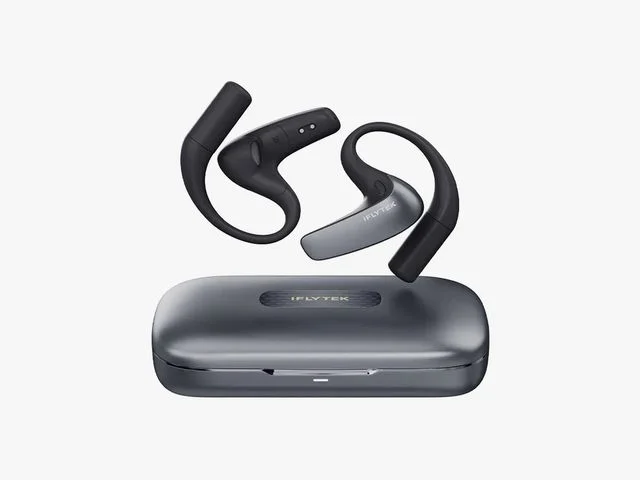
Hands-free operation is the real selling point of iFLYTEK’s translation earbuds. Once set up, they detect who’s speaking and translate quickly, without requiring you to press a button or tap an earbud. In my testing, that made the exchange feel closer to having an interpreter quietly in your ear than operating a translation app.
The familiar two-person setup is simple: each person wears one of the 12-gram earbuds while a phone app handles translation in both directions. You can also wear both earbuds for one-way translation, including during phone calls. That flexibility makes earbuds a more personal, natural way to communicate than passing a phone back and forth.
The catch is connectivity
These were the best translation earbuds I’ve tested, but their usefulness depends on having internet access on your phone. There’s no offline mode. If you’re traveling somewhere with unreliable service, that limitation could matter more than the hands-free convenience.
The iFLYTEK AI Translation Earbuds list for $349, with the manufacturer offering them for $279 at the time shown; Amazon lists them for $349. That discount makes the price easier to swallow, though you’re still paying a premium for a device whose core function requires a connection.
Check the price at iFLYTEK or Amazon.
 Courtesy of iFLYTEK