Kubernetes AI Conformance Moves to SIG Architecture as Certified Platforms Grow
Kubernetes’ AI Conformance effort has moved from a temporary Working Group into a permanent SIG Architecture subproject. The shift puts ongoing oversight of AI infrastructure requirements alongside Kubernetes’ broader work on conformance and API design—a sign that AI workloads are becoming part of the platform’s core operating concerns.
The program has also gained practical reach: certified platforms grew from 18 to 31 within a few months, according to Janet Kuo of Google and Yuan Tang of TensorScale AI. Their account points to the initiative’s central task: give users a shared basis for running AI workloads across Kubernetes platforms while allowing the underlying tools to keep changing.
A shared baseline for a varied ecosystem
Kuo, a Senior Staff Software Engineer at Google, has maintained Kubernetes since 2015. She began by working on core workload controllers and now serves as a SIG Apps Co-chair and TL. She proposed the AI Conformance effort after seeing vendors build AI infrastructure for Kubernetes in different ways, raising the prospect of a fragmented ecosystem. After securing CNCF leadership support for her proposal, she rallied co-chairs Yuan Tang, Rita Zhang, and Mario Fahlandt around the program. Kuo also leads the AI Conformance program.
Tang co-founded TensorScale AI, which builds infrastructure for world models. Previously, he led development of Red Hat’s AI platform and its upstream open-source strategy. His Kubernetes work includes collaborations with projects such as Kubeflow, Argo, and KServe, and helping establish and lead WG Serving. He joined the conformance effort as interest grew in bringing inference requirements into the program, including work on the Gateway AI Inference Extension.
The Working Group addressed a widening gap between the kinds of AI workloads organizations wanted to run and the inconsistent infrastructure supporting them. Distributed training, large-scale inference, GPU-heavy pipelines, and agentic systems put pressure on accelerator access, networking, scheduling, and inference orchestration. When vendors implement these capabilities differently, platform teams face portability problems and different operational behavior from one Kubernetes environment to another.
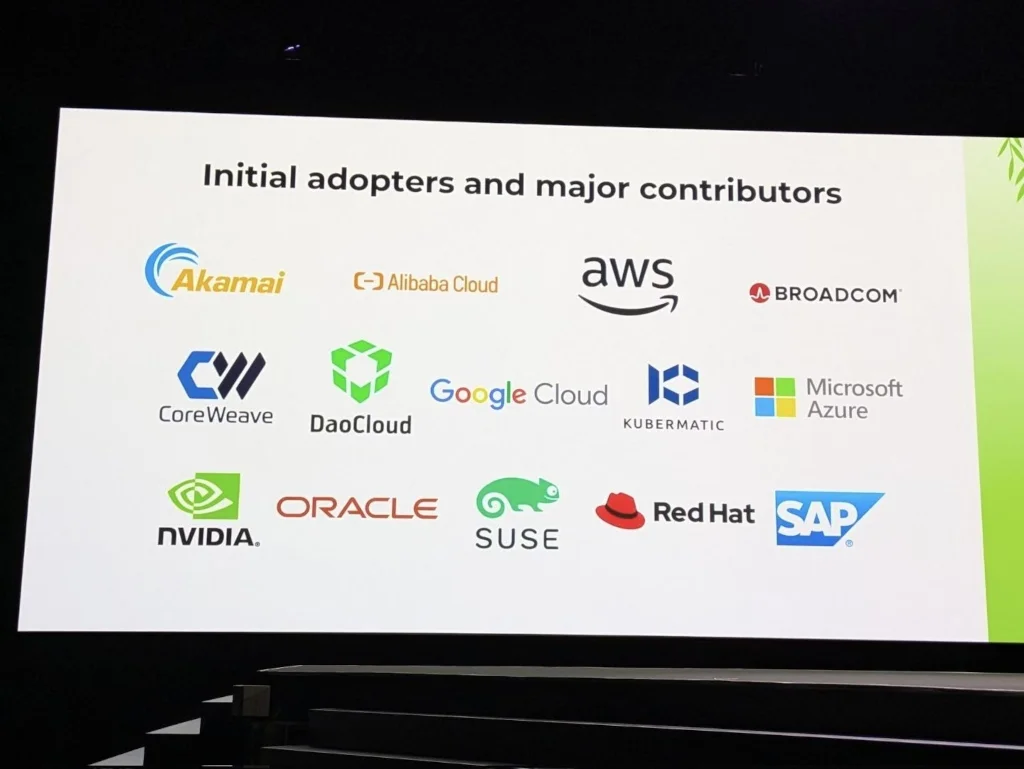
The group set out to define vendor-neutral infrastructure expectations, improve interoperability, and establish common requirements for running AI workloads at scale. Kuo and Tang say it met its initial goals by launching the Certified Kubernetes AI Conformance Program, defining Kubernetes AI Requirements (KARs), drawing participation from major ecosystem players, and aligning work around Kubernetes primitives relevant to AI. The group also laid out a roadmap for automated conformance verification.
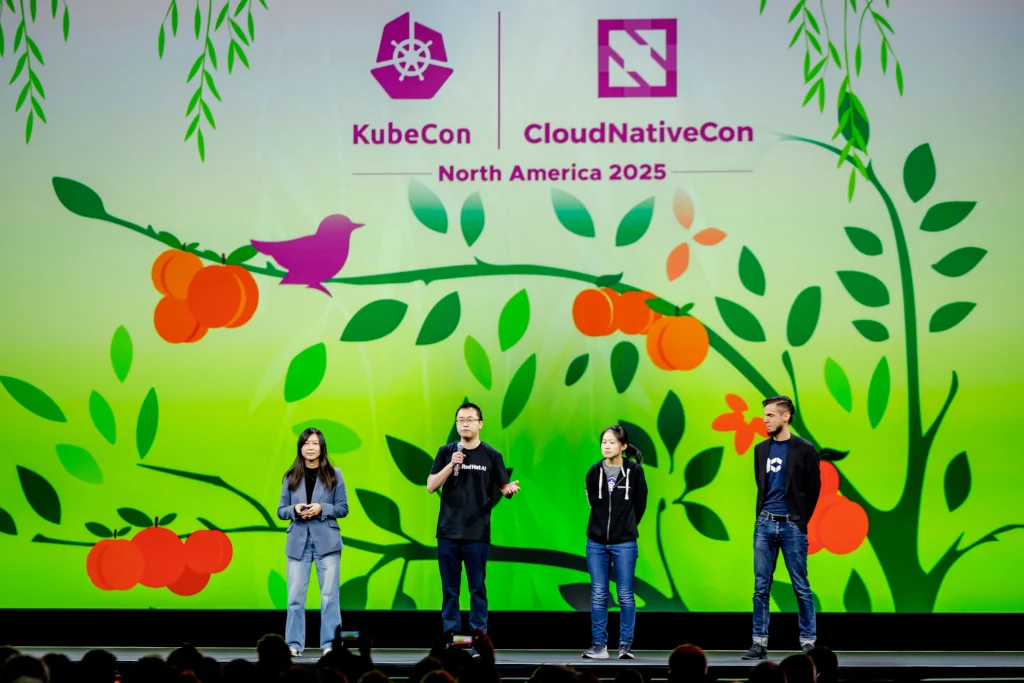
The increase from 18 to 31 certified platforms is a concrete measure of adoption. The speakers describe the broader result as consensus that AI workloads are a first-class Kubernetes use case. The initiative’s visibility at KubeCon + CloudNativeCon reflects a change in how operators view AI: work once associated mainly with ML platforms and GPU-focused research environments has become a mainstream infrastructure concern.
That change raises the stakes for the platform layer. Accelerator scheduling, high-performance networking, workload-aware orchestration, and low-latency inference all affect whether AI applications can run consistently across cloud, on-premises, and edge environments. A common conformance baseline could help organizations compare platform capabilities without tying their workloads to one vendor’s stack.
Why the work now sits in SIG Architecture
Kubernetes Working Groups are temporary by design. The AI Conformance Working Group had a defined job: publish initial requirements and establish the certification process. With those milestones reached, it was archived, and AI Conformance became a permanent subproject under SIG Architecture.
The placement connects AI requirements to the group responsible for Kubernetes conformance and API design principles. Kuo and Tang see that connection as necessary because AI infrastructure continues to change, while Kubernetes must maintain stable interfaces. The subproject’s continuing remit is to keep requirements current and vendor-neutral, and to help shape shared standards when the ecosystem lacks a clear pattern.
Their approach to change is deliberately gradual. New infrastructure concepts can first appear as recommended SHOULD requirements, giving implementers room to test approaches and build agreement. As APIs stabilize and adoption grows, requirements can advance to mandatory MUST status. This tiered model lets the conformance work respond to new capabilities without forcing immature design choices into the platform too early.
The scope also stays at the infrastructure layer. For example, the program tests accelerator support through Dynamic Resource Allocation (DRA), rather than prescribing particular AI frameworks or model servers. That boundary gives platform teams a consistent way to assess core capabilities while application-level tools continue to evolve independently.
DRA illustrates why architectural coordination matters. Its development, including work by WG Device Management, touches concerns that span multiple parts of Kubernetes. Kuo and Tang compare this kind of cross-cutting challenge to the early Working Group phase: experts from different SIGs can work through the problem and build agreement before longer-term ownership is established.
As a SIG Architecture subproject, AI Conformance can focus more directly on how AI needs fit into Kubernetes’ developing architecture. Scheduling and resource allocation are among the foundational areas under consideration. The aim is to treat AI support as part of the platform’s core design, rather than as a separate layer attached after the fact.
Contributing requirements and code
Contributors can start with the kubernetes-sigs/ai-conformance repository and join the subproject’s meetings. Those interested in requirements can review pull requests or propose a Kubernetes AI Requirement using the KAR template. Developers can contribute to automated Go test suites in the test/ directory. Platform vendors seeking certification can find program details at cncf/k8s-ai-conformance.
The program was announced during the keynote at KubeCon North America 2025. By the update keynote at KubeCon Europe 2026, the certified platform count had risen from 18 to 31. That growth suggests the ecosystem sees value in a common, vendor-neutral way to describe AI infrastructure capabilities. The next test is whether its evolving requirements and automated checks can keep pace with real platform changes while preserving the consistency that makes conformance useful.