MacBook Pro’s M5 Models Stay on Sale Alongside Apple’s New Touchscreen Mac
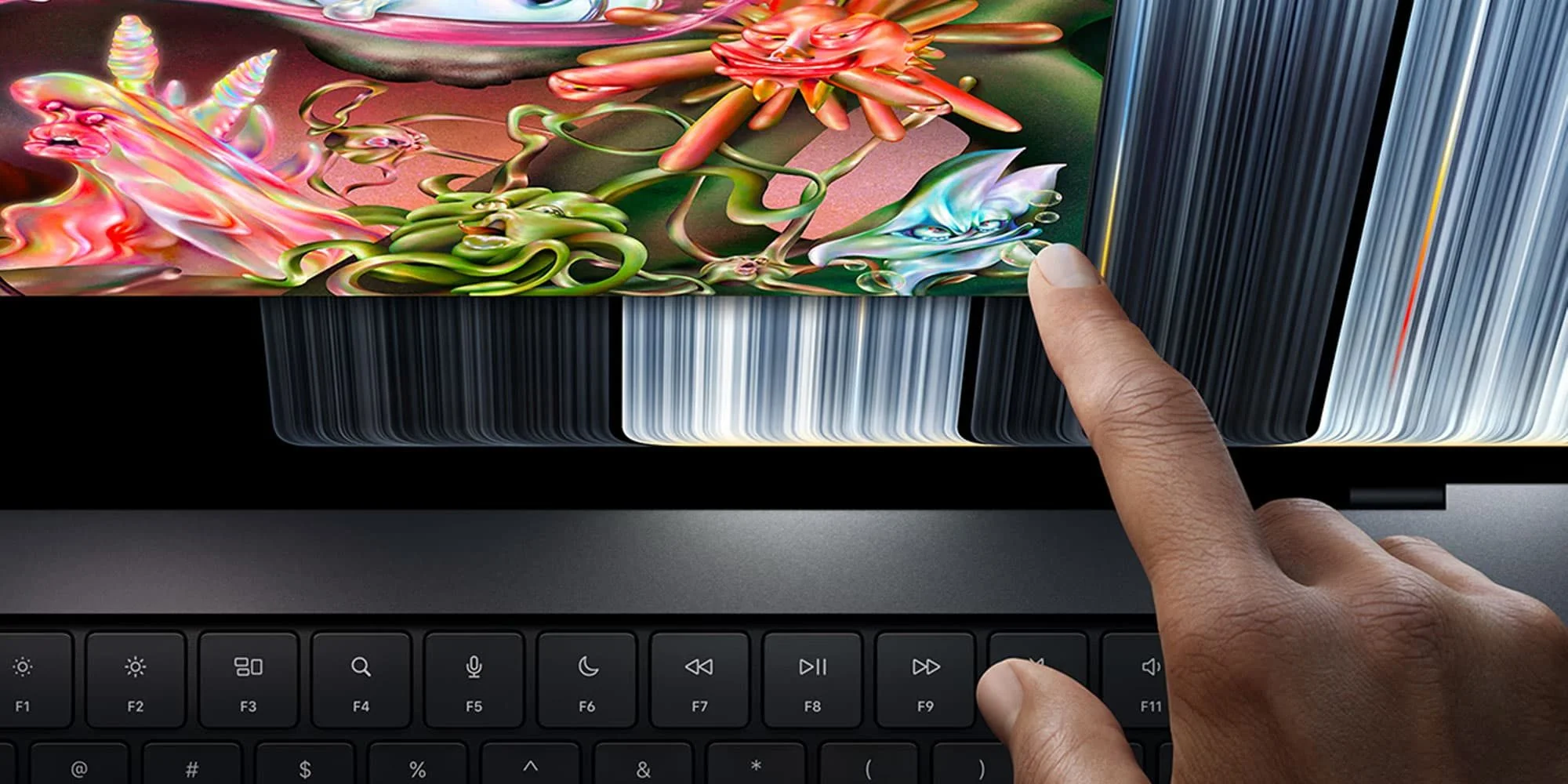
Apple’s new touchscreen MacBook Pro makes a stronger case for its price by adding a redesigned display and chassis. But the practical choice for many buyers may be the M5 Pro and M5 Max models that Apple’s keeping on sale alongside it. That split gives the new machine a clearer identity: it’s a design and interaction upgrade, while the familiar models remain the straightforward option for people focused on processing power.
Two MacBook Pro lines, two upgrade priorities
The touchscreen model, called MacBook Pro with PROLED XDR Display, arrives starting November 6. Its headline change is touch input, but the package also includes a tandem OLED display, slimmer bezels, a thinner and lighter body, a redesigned audio system and Dynamic Island. Apple’s brought back the glowing logo on the lid, too. Taken together, those changes make this a broader redesign than a screen feature added to an otherwise familiar laptop.
That’s a meaningful set of changes. A rumored $400 premium looks easier to justify when it buys more than a touchscreen: the display, body and audio system all contribute to the experience a buyer sees and feels every day. The value still depends on what someone wants from a MacBook Pro, though. A more attractive screen and a lighter chassis matter most to people who notice those differences in regular use; they don’t automatically make the laptop a better purchase for someone whose main concern is faster work.
And there’s a basic question behind the touch feature: how much will it change the way people use a MacBook? Apple’s addition of touch input could make some interactions feel more direct, but the value will depend on whether it fits naturally into the work people already do. A feature can be impressive in a product announcement and still matter little to a buyer who spends the day relying on a keyboard, trackpad or external setup.
Still, the new model uses the same chips as the current non-touchscreen line, so buyers focused on processing speed may not see the upgrade they were hoping for. That’s the central trade-off. The design has changed substantially, but the processor story hasn’t changed along with it.
There’s one possible wrinkle: the updated thermal system could affect performance under load. Apple’s changes appear aimed primarily at managing heat from the new display, though, so reviews will have to show whether they produce a measurable performance gain. A laptop’s performance isn’t only about its chip; how well it handles sustained workloads can matter, too. But until there’s evidence from testing, a redesigned cooling system is a reason to look for results, not a reason to assume the machine is faster.
Keeping the familiar models matters
Apple’s decision to continue selling the non-touchscreen M5 Pro and M5 Max MacBook Pro gives buyers a direct choice. They can pay extra for the new screen and design, or put that money toward a machine with the same chip performance at a lower starting price. For shoppers who value compute capacity over touch input, that’s a useful bit of flexibility. It also makes the choice easier to describe: buyers can weigh the experience they want against the work they need the computer to handle.
This is more significant than it looks. When a company offers a new interaction style only on its top models, customers who want more performance can end up paying for a feature they didn’t ask for. Keeping the existing machines available lets Apple sell the redesign on its own merits. If you’re working in this space, that’s a useful distinction to watch: does a new interface expand what buyers can choose, or does it become a toll they have to pay for other upgrades?
It also marks a change from Apple’s 2016 Touch Bar launch. Back then, buyers who wanted a more powerful Mac or a 15-inch screen had to accept the Touch Bar and pay more: $300 extra for the 13-inch model with the feature, or $400 for the redesigned 15-inch model. This time, Apple hasn’t made the new interaction method a condition of buying a higher-end MacBook Pro. That difference gives customers more control over which improvements they’re paying for, even if the touchscreen version ultimately proves attractive to a narrower group.
The upgrade decision depends on what feels limited
I’ve been weighing an upgrade from a 2023 16-inch MacBook Pro with an M2 Pro. It still performs well, but its 16GB of memory is beginning to feel tight. That’s a different kind of problem from needing a newer processor: a machine can remain fast in many tasks while memory limits start to affect the work a person can keep open or do comfortably. The right upgrade, then, depends on which constraint is actually getting in the way.
Rumors about the next MacBook Pro’s chips and redesign had raised the prospect of a bigger performance jump, though reports offered conflicting accounts of what Apple would ship. That uncertainty can make it tempting to wait for a cleaner, more dramatic upgrade story. But rumors can frame expectations without settling the practical question buyers face: whether the available machine addresses the problem they have now.
I’d hoped the touchscreen model might pair its design changes with faster chips, especially given reports of a $400 premium. That expectation didn’t pan out. The new hardware may be compelling for people who want touch, OLED and the lighter design, but the existing M5 Pro and M5 Max models look like the clearer fit for a performance-led upgrade. The numbers here are underwhelming for anyone expecting a processor leap alongside the redesign; the screen and chassis have to carry the case for paying extra.
Here’s the thing: a better display can be a real upgrade, but it’s not a substitute for more memory or faster processing when those are the limits a buyer actually feels. Someone who works mainly with visual content may put a high value on the new screen, while someone whose current laptop is constrained by memory may care more about the capacity and performance of the model they choose. The product names alone won’t make that decision. The work will.
What buyers should watch next
Reviews will help answer the questions the product details can’t settle on their own: whether the touchscreen changes daily use, whether the thinner body affects comfort or practicality, and whether the revised thermal system makes a measurable difference under sustained load. Those details matter because a spec sheet can describe what changed, but it can’t show which changes are useful after weeks of ordinary work. And yet, there’s no need to treat every unknown as a reason to delay; buyers can start with the constraint they already know they have.
Waiting for a future M7 generation might bring another step forward. But there’s rarely a perfect moment to replace a Mac, and waiting indefinitely can leave a real constraint—like limited memory—unaddressed. The choice now is more straightforward: pay for the new display and design, or direct the budget toward the performance you need today. The touchscreen model’s appeal will come down to whether its collection of design changes is worth the premium to a particular buyer. For everyone else, keeping the M5 Pro and M5 Max options on sale makes the decision less complicated. A clearer choice.